
IMG_6082
IMG_6083
IMG_6084
IMG_6085
IMG_6086
IMG_6087
IMG_6088
IMG_6089
IMG_6090
IMG_6091
IMG_6092
IMG_6093
IMG_6094
IMG_6095
Apraxi Communication Support App
Solo Design and Development by Scott Cressman
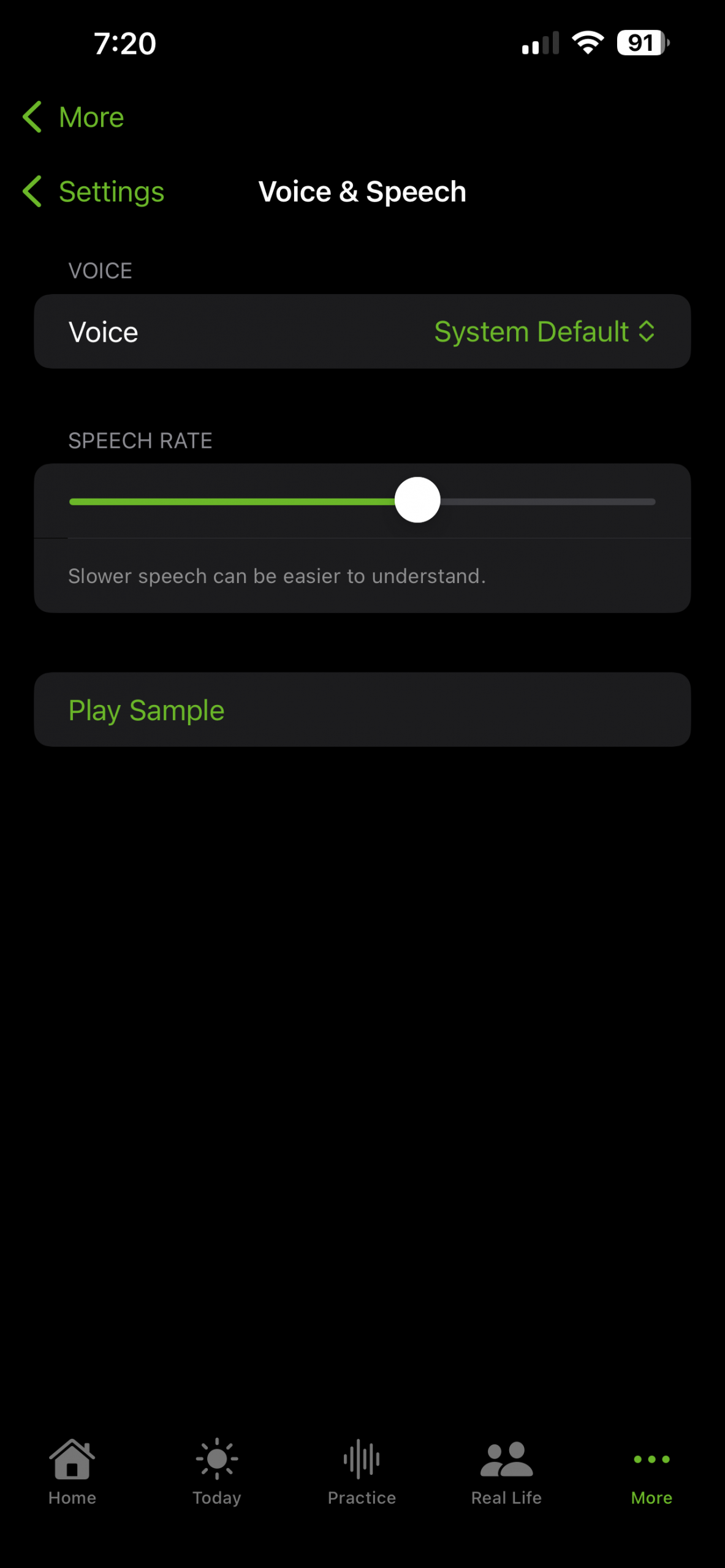
Apraxi is a calm, human-centred communication support app designed for adults with apraxia of speech to support language relearning following strokes and other communication-limiting life events. It helps people express what they need using clear phrases, supportive practice tools, and low-stress real-life playback, without forcing speed, perfection, or performance.
Apraxi isn’t about fixing speech. It’s about making communication possible for those who have lost the ability to speak.
What’s inside
-
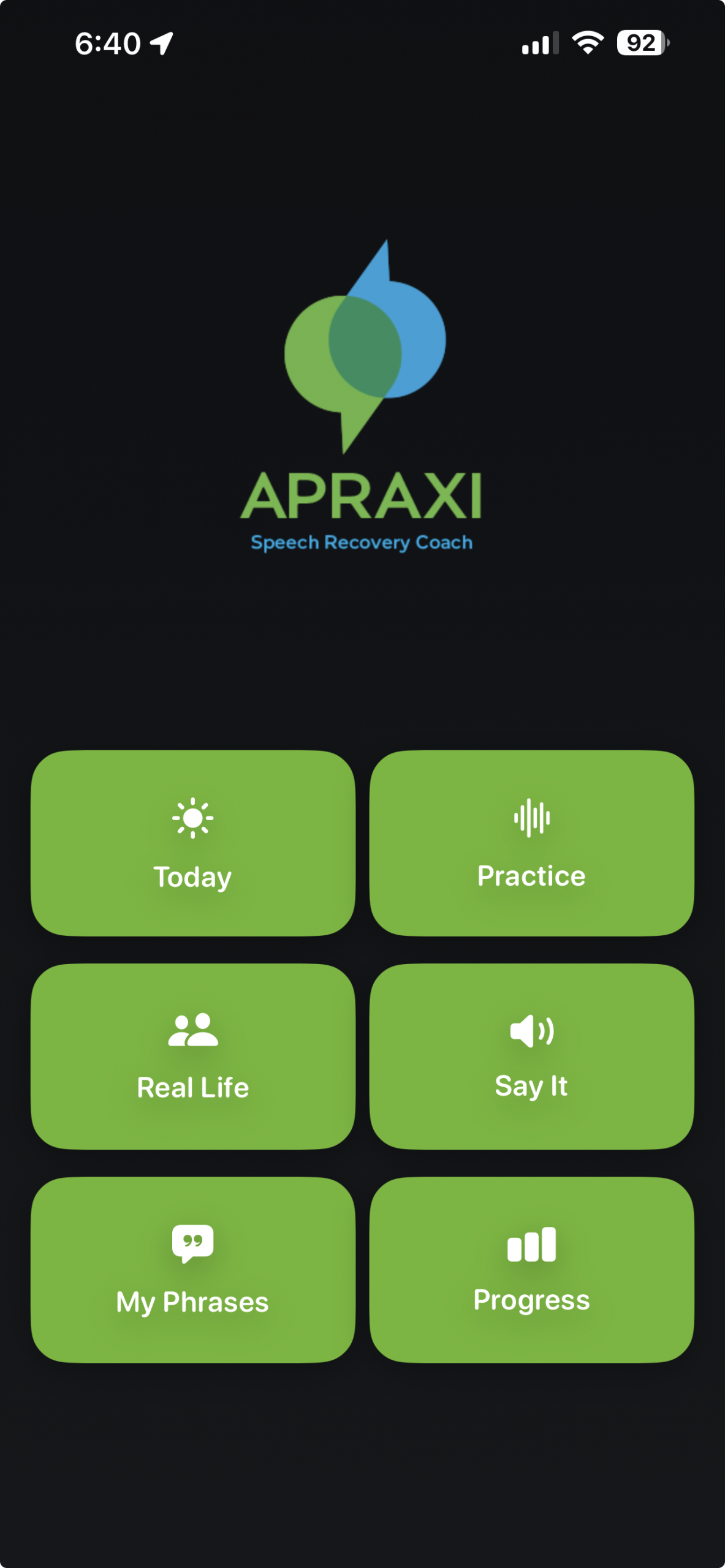
Start Page
A grounding entry point with clear pathways into Today, Practice, Real Life, and support tools — designed to reduce decision fatigue and help users orient quickly. -
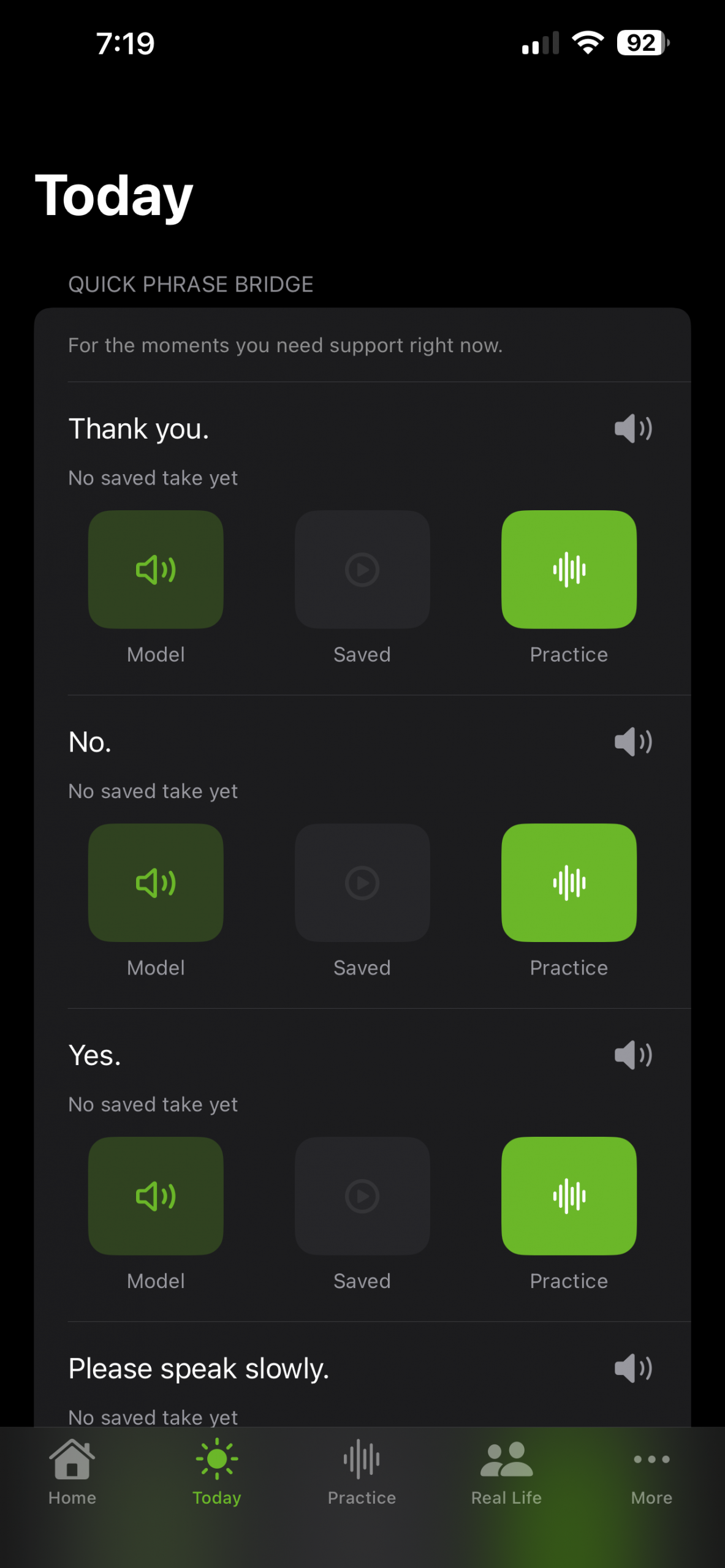
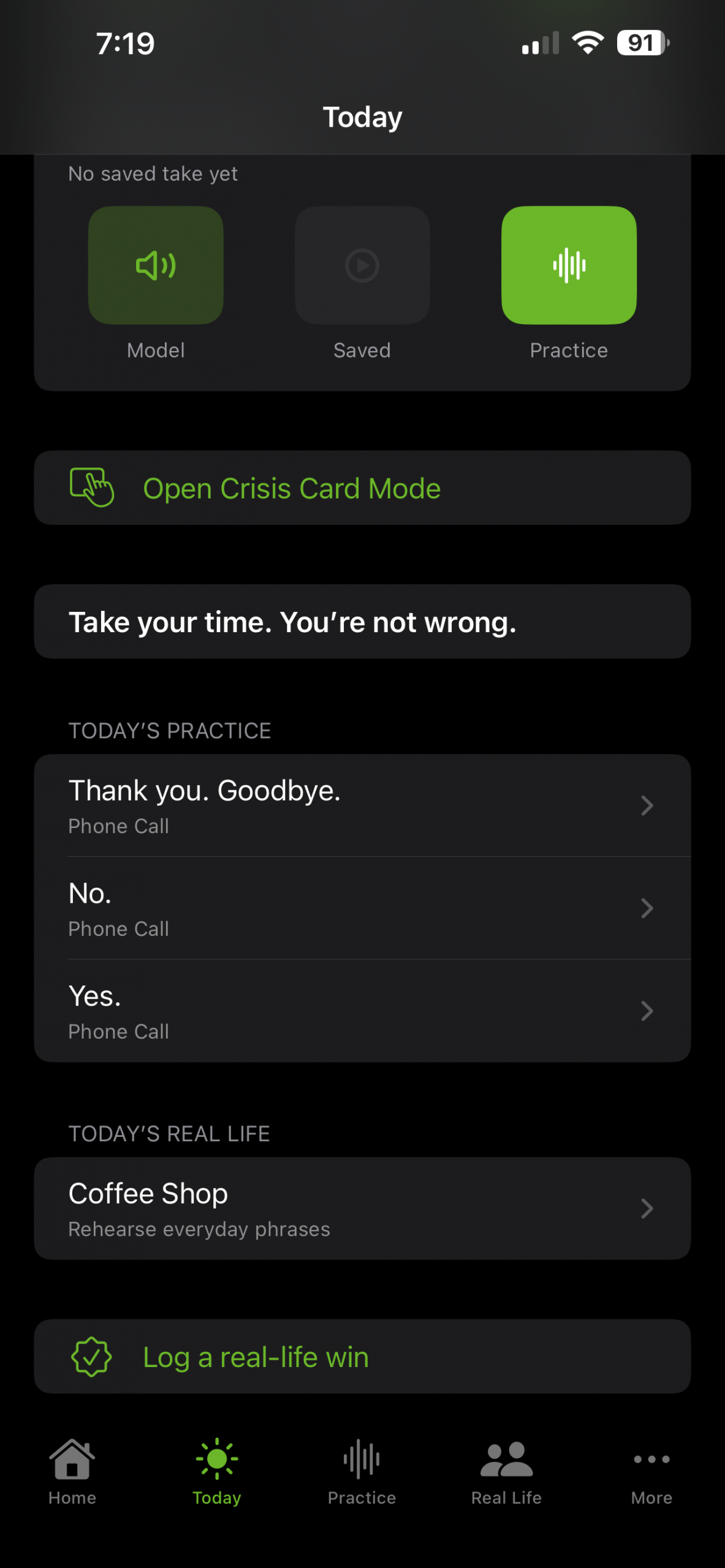
Today: Quick Phrase Bridge
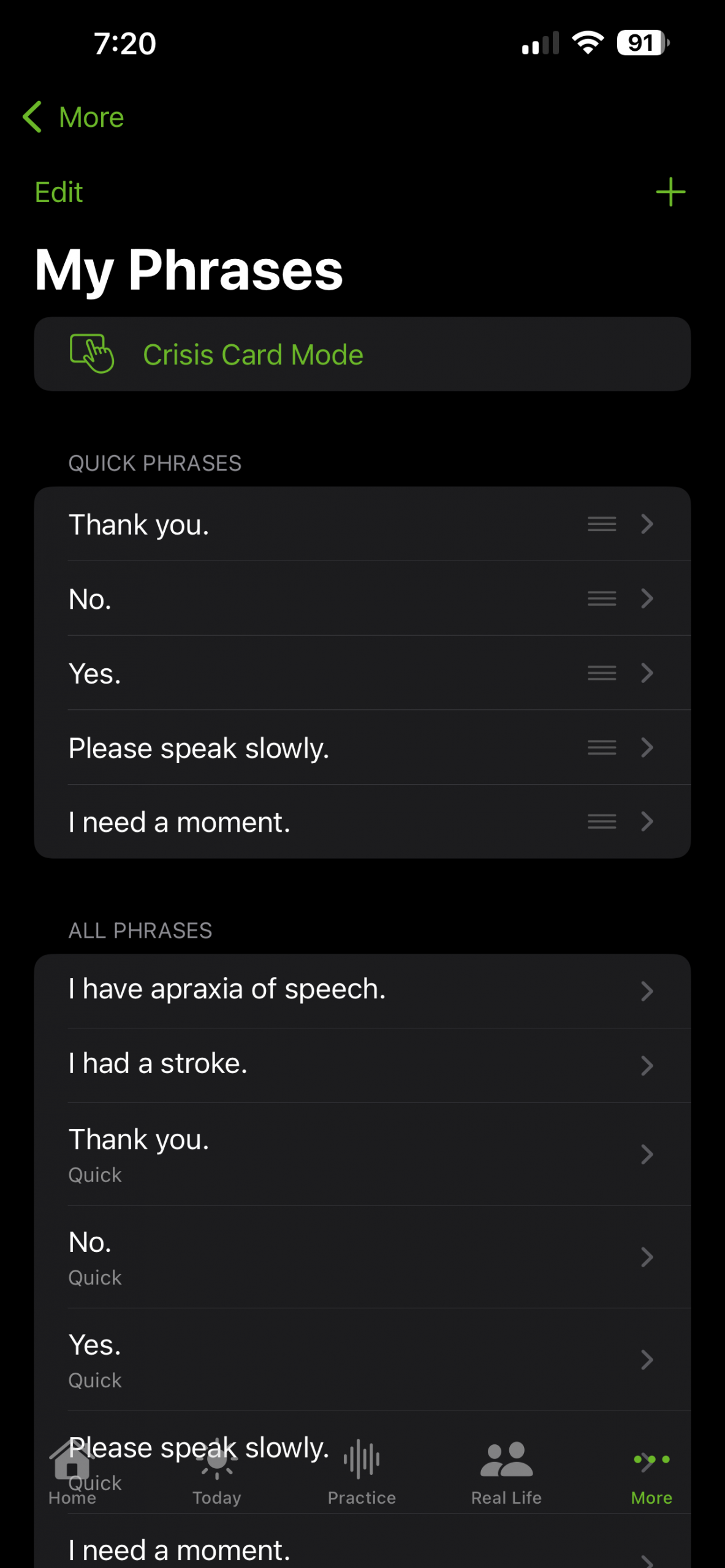
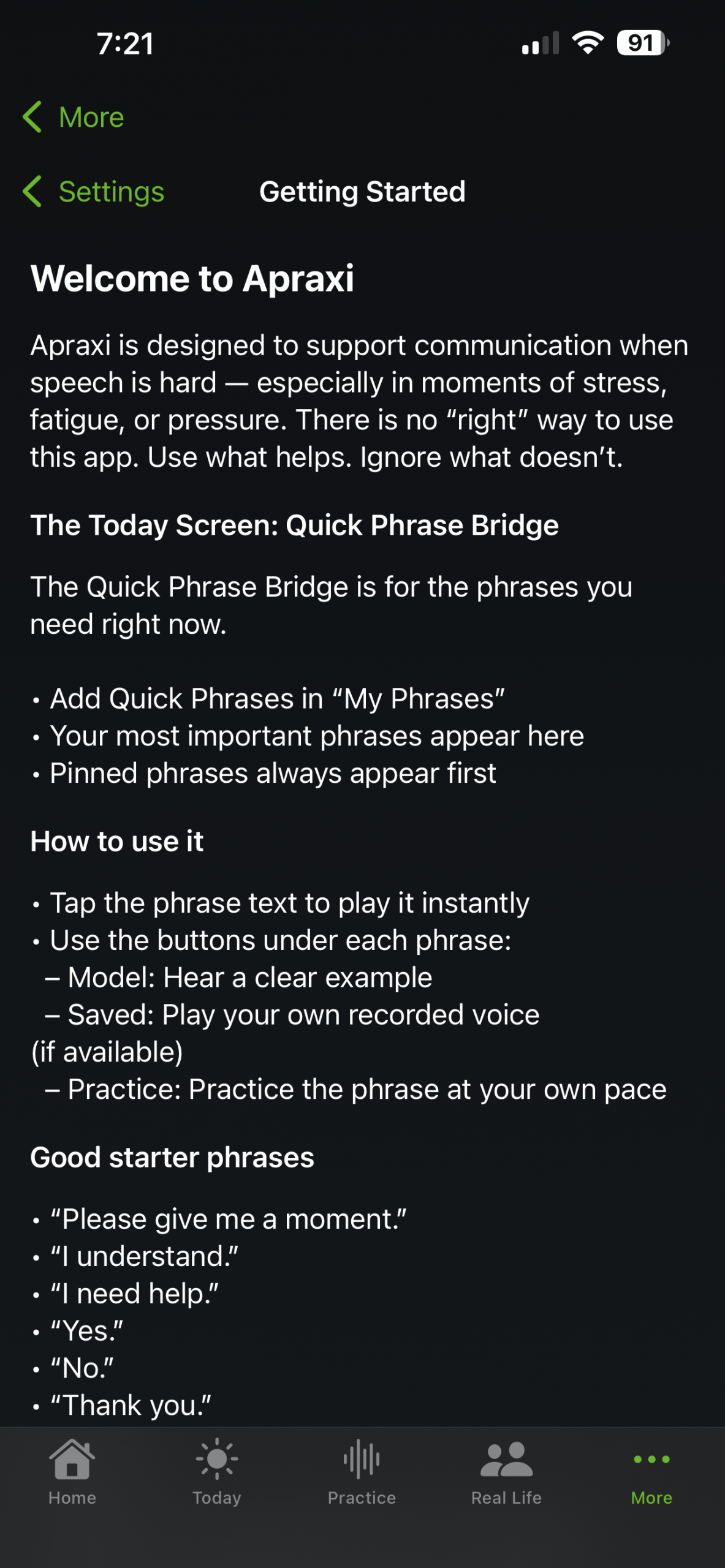
A fast-access screen for phrases you need right now. Pin your most important phrases so they always appear first. One tap plays the phrase instantly. -
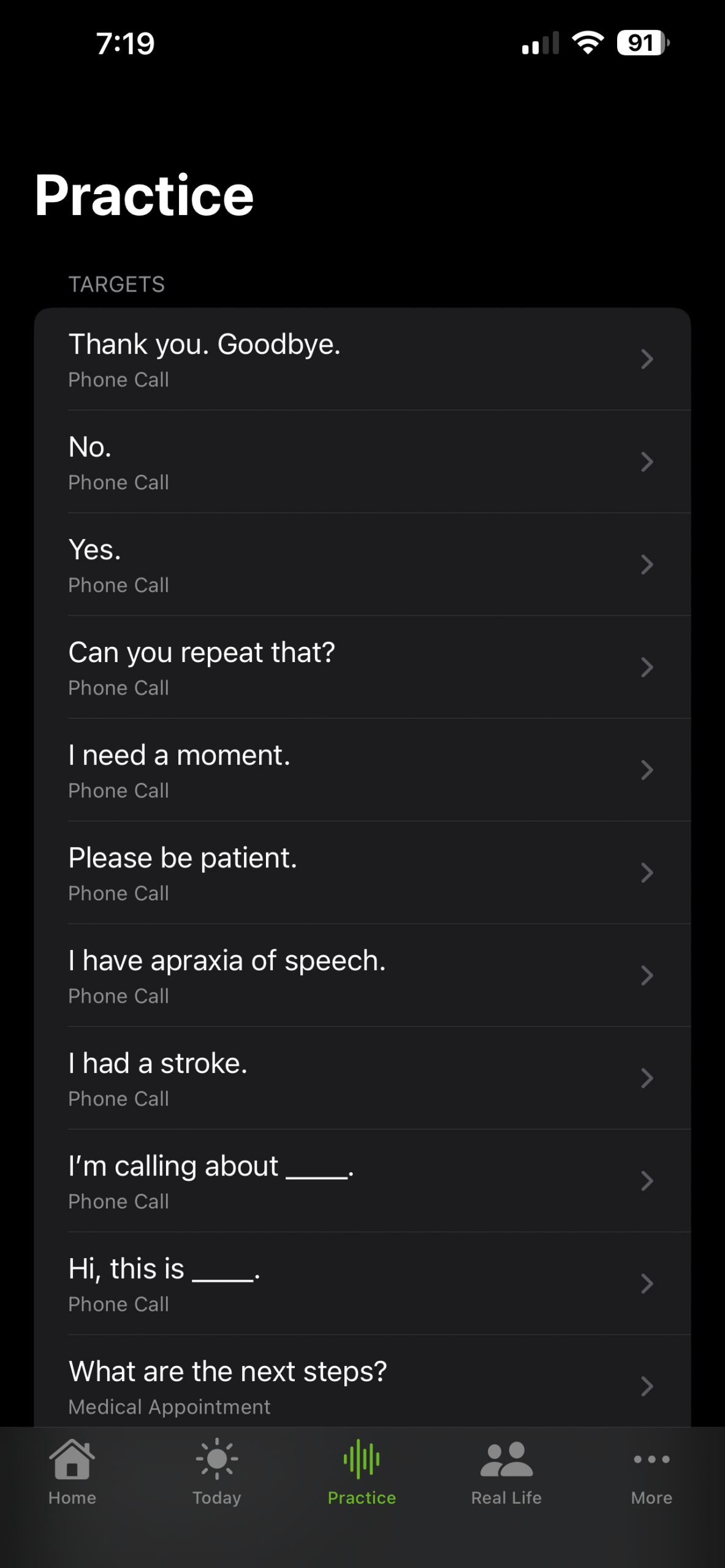
Practice Mode
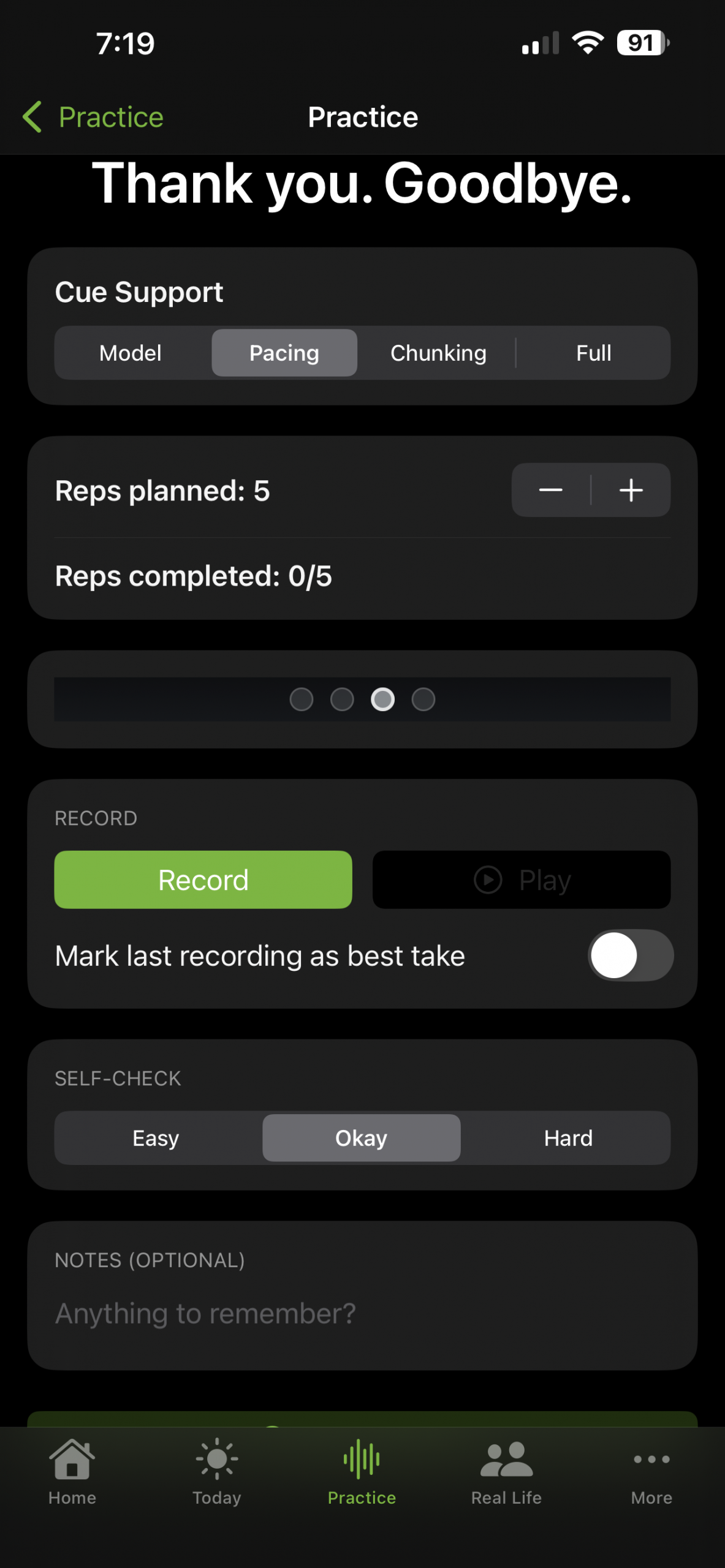
A supportive, self-paced space to practice phrases without pressure. Includes adjustable Cue Support (Low / Medium / High) with pacing dots, phrase chunking, model voice playback, and gentle coaching tips. -
Real Life Mode
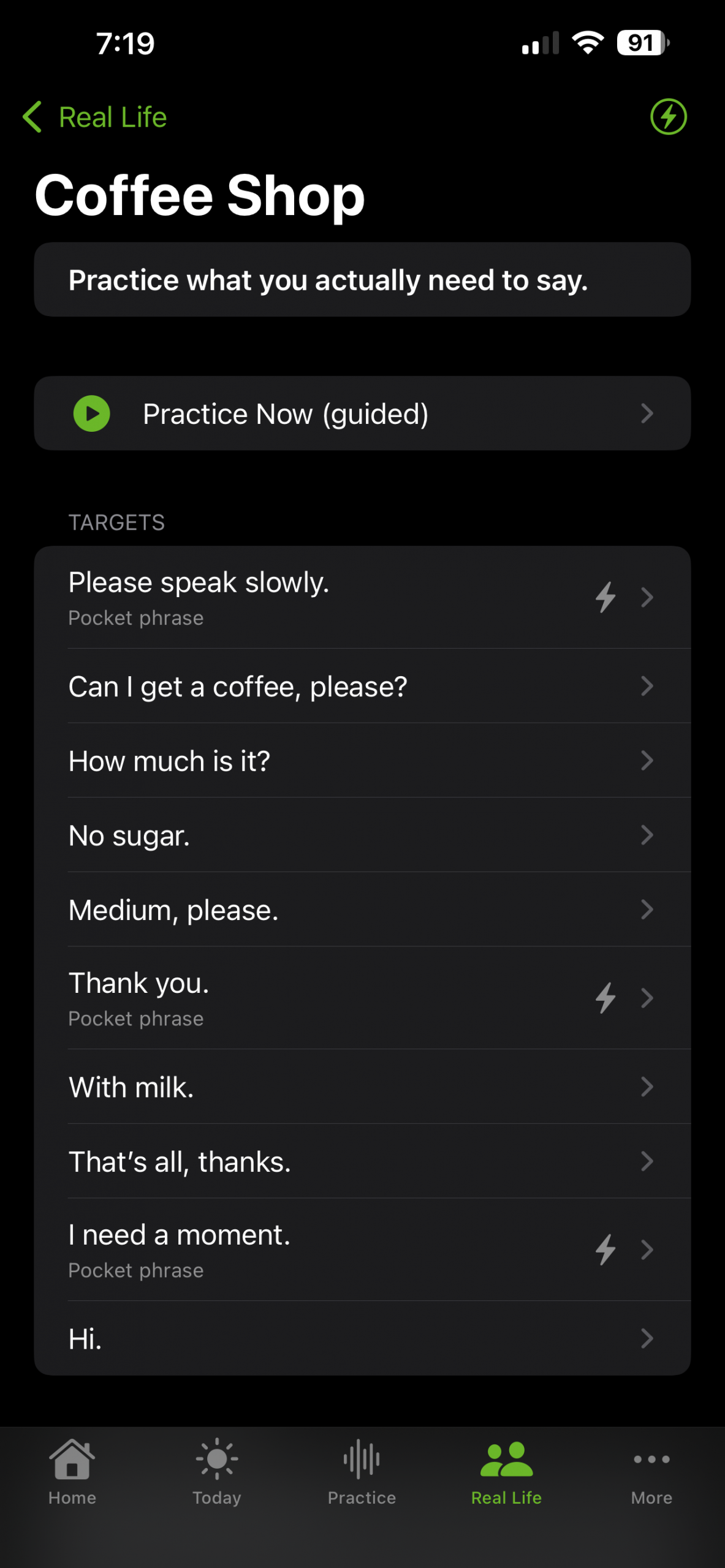
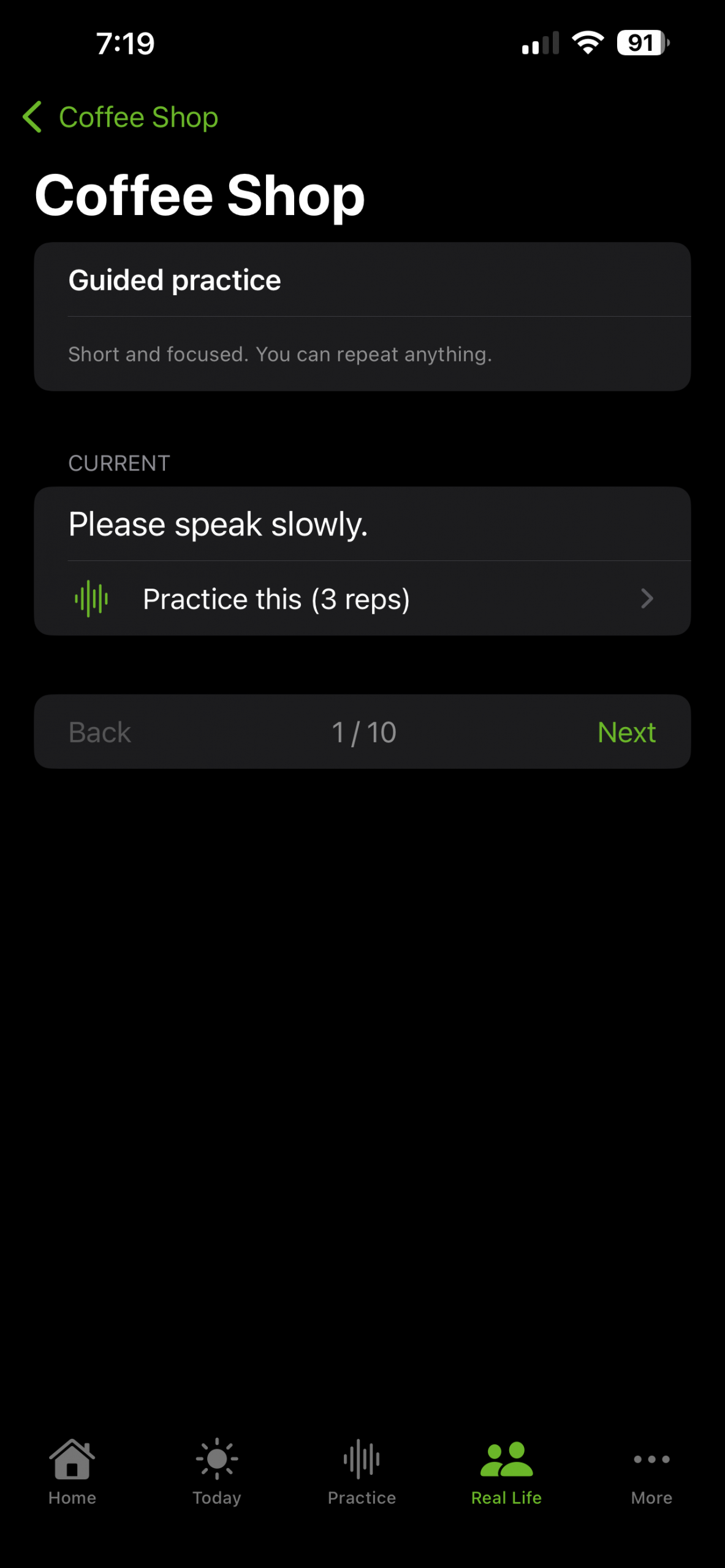
A simplified playback-focused view for real-world situations. Tap to speak, replay saved recordings, or hand the phone to someone else when talking feels overwhelming. -
Crisis Card Mode
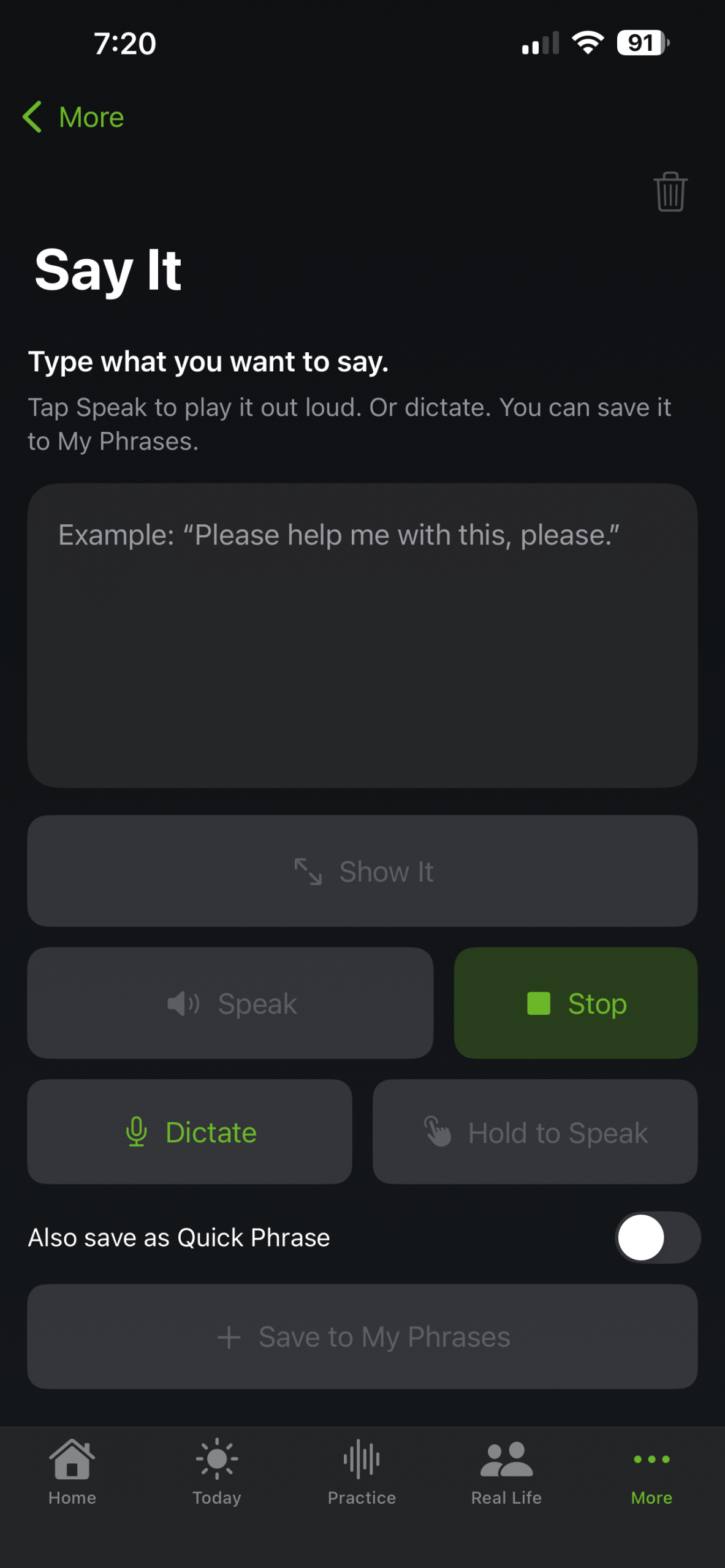
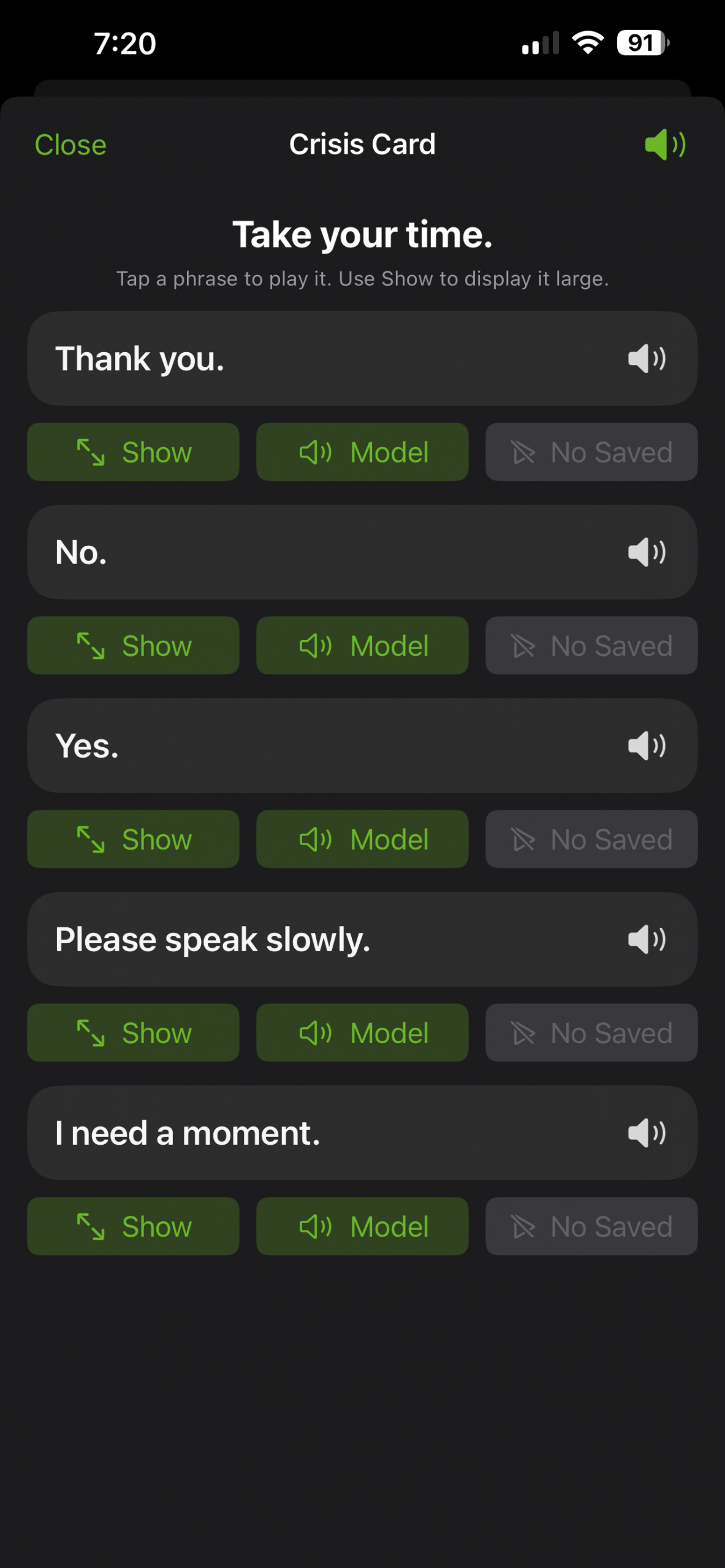
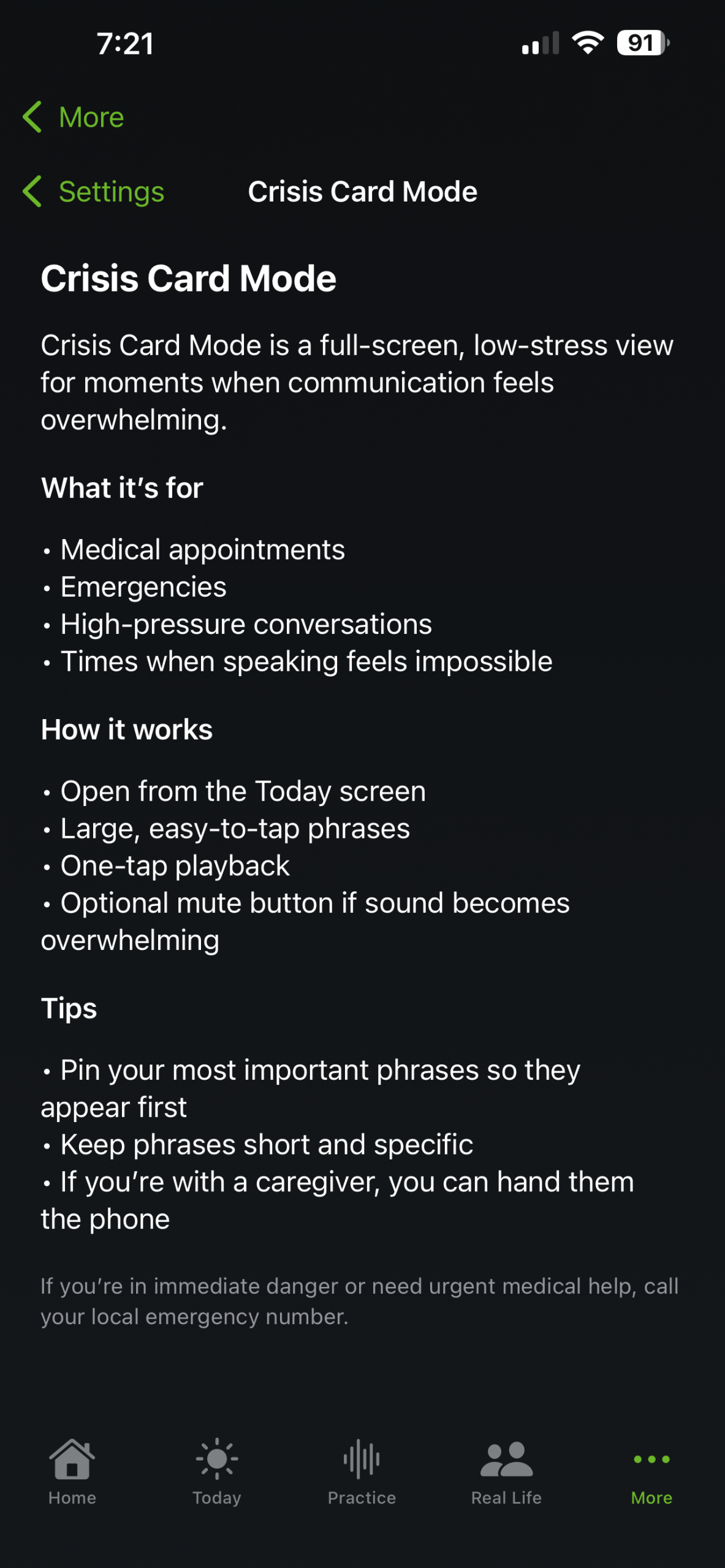
A full-screen, low-stimulation mode for high-pressure moments like medical appointments or emergencies. Large text, one-tap playback, optional mute, and “Show” mode for visual communication. - Say It Mode
An immediate fall back for when the user needs to communicate. The feature enables text to voice and text to large display text so that users can easily communicate with others. -
Progress & Insights
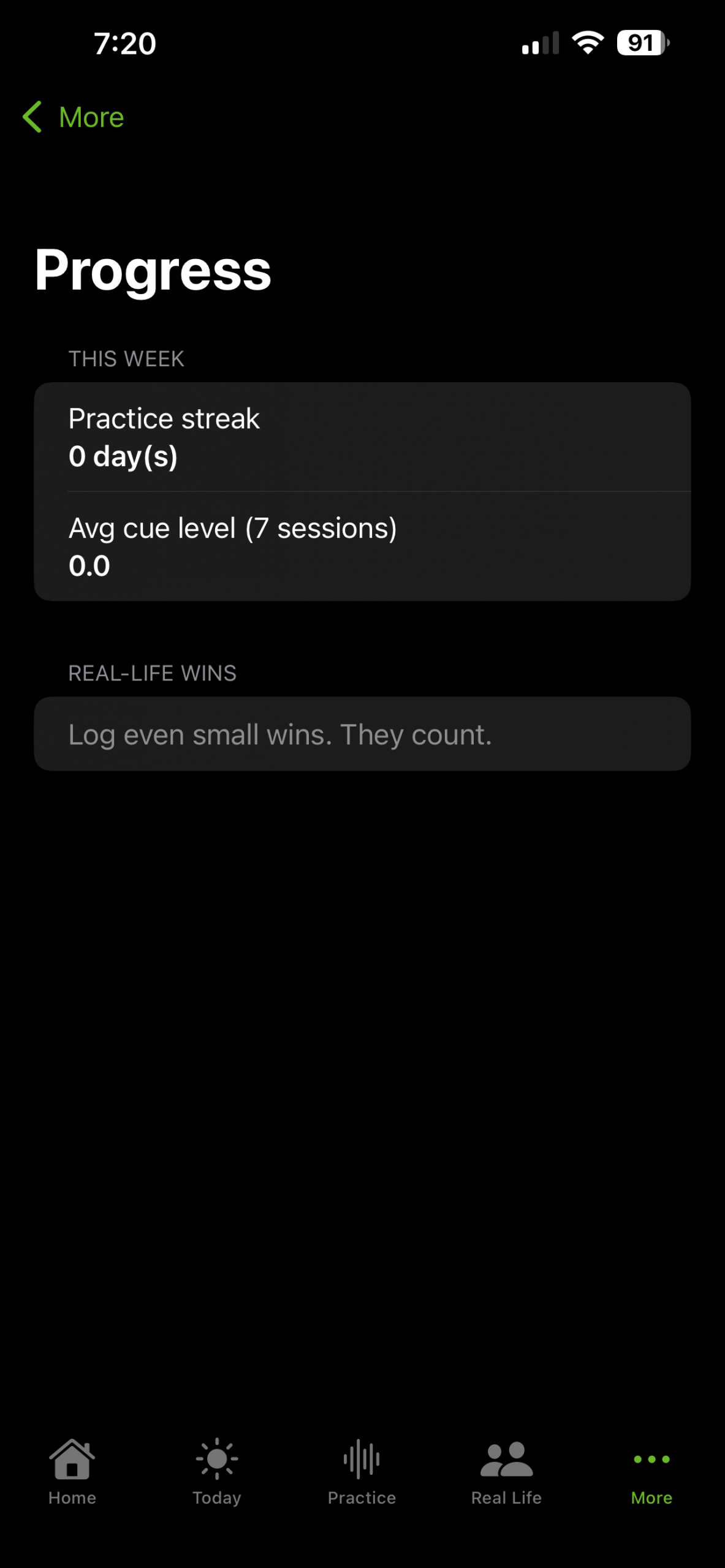
A lightweight progress view that tracks practice streaks and cue usage — without judgment. Progress is about confidence gained, not scores.
Who this app is for
Apraxi is designed for adults with apraxia of speech who have lost or partially lost their ability to speak due to a stroke, brain injury, neurological condition, or other life-altering event.
It is for people who:
- Know what they want to say, but can’t reliably make their speech come out
- Experience fatigue, stress, or pressure that makes speaking harder
- Need support communicating in real-world situations—not just in therapy
- Want a respectful, adult-focused tool that doesn’t feel clinical or infantilizing
Apraxi is also supportive for caregivers, partners, and clinicians, helping create shared understanding and reducing the pressure placed on spoken communication alone.
This app is not about “fixing” speech—it’s about restoring agency, clarity, and dignity when speech is difficult or unavailable.
Why this matters
Most communication tools assume speech is always available — or that practice should feel like training. Apraxi is built on a different idea: communication comes first — clarity over correctness, calm over speed. By separating practice from real-life use, and by letting support scale up or down as needed, Apraxi respects how speech actually works in the body — especially under stress.
Key design principles
-
Low pressure by default
-
Support adapts to the moment
-
No “right way” to use the app
-
Clear language, large targets, minimal UI noise
-
Dignity-first design for real-world use
About the designer developer
Apraxi is designed and built by Scott Cressman, a communication design professor and product designer with lived experience of neurodivergence. The app combines inclusive interface design, trauma-aware UX, and practical speech-support concepts into a tool that prioritizes human needs over clinical rigidity.