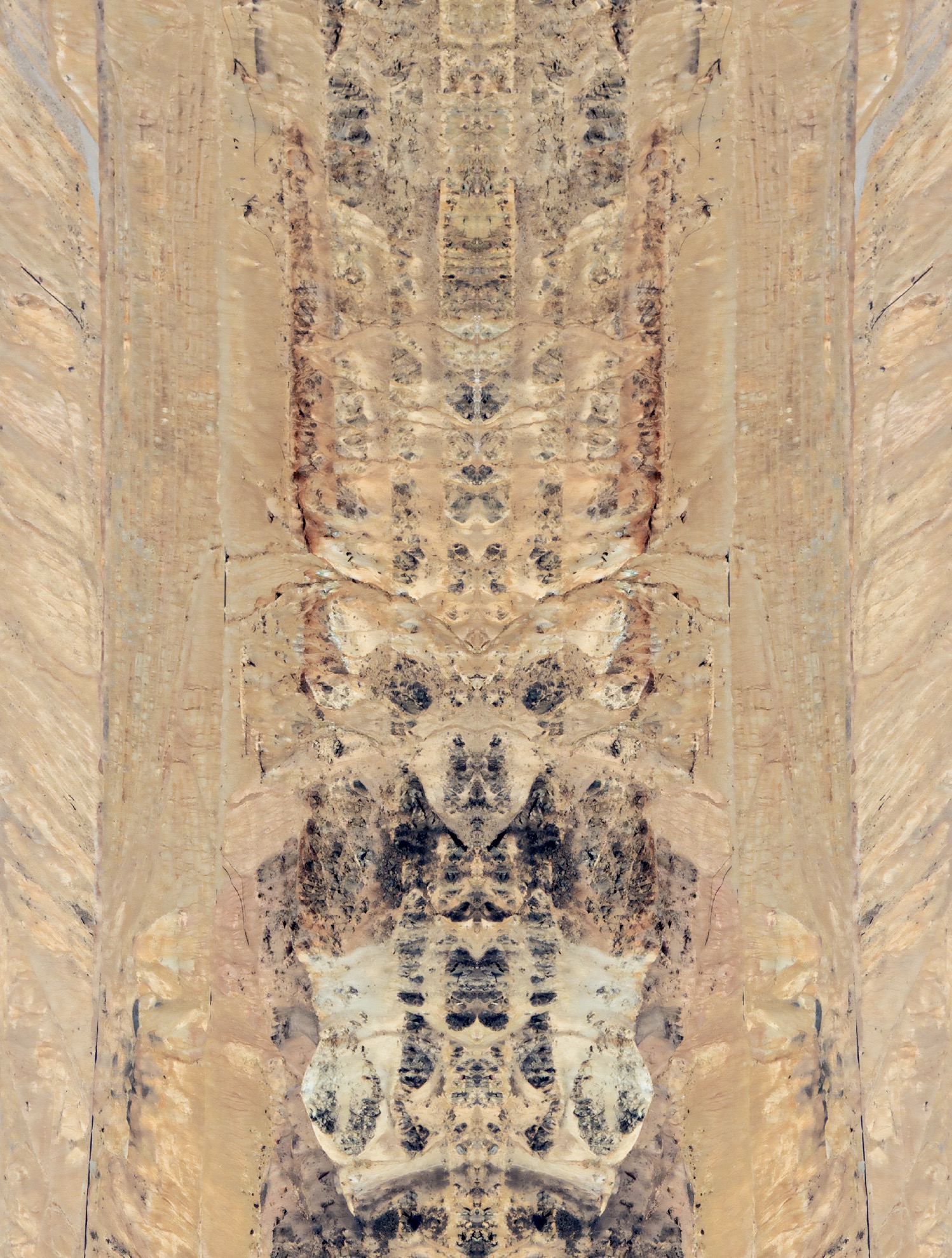
Copper Gods: Sacred Forms at the Edge of the Anthropocene
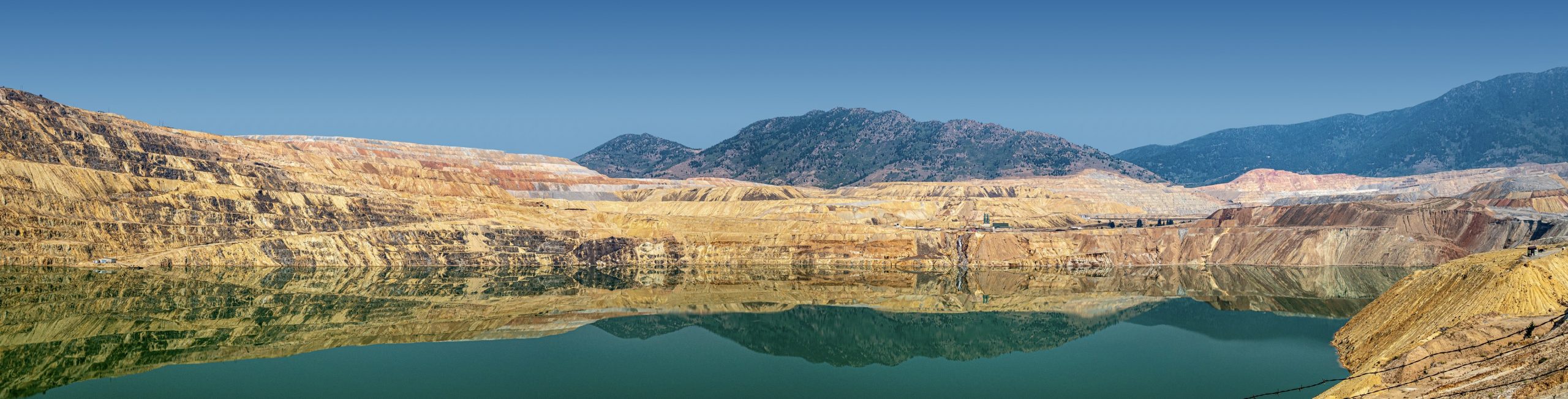
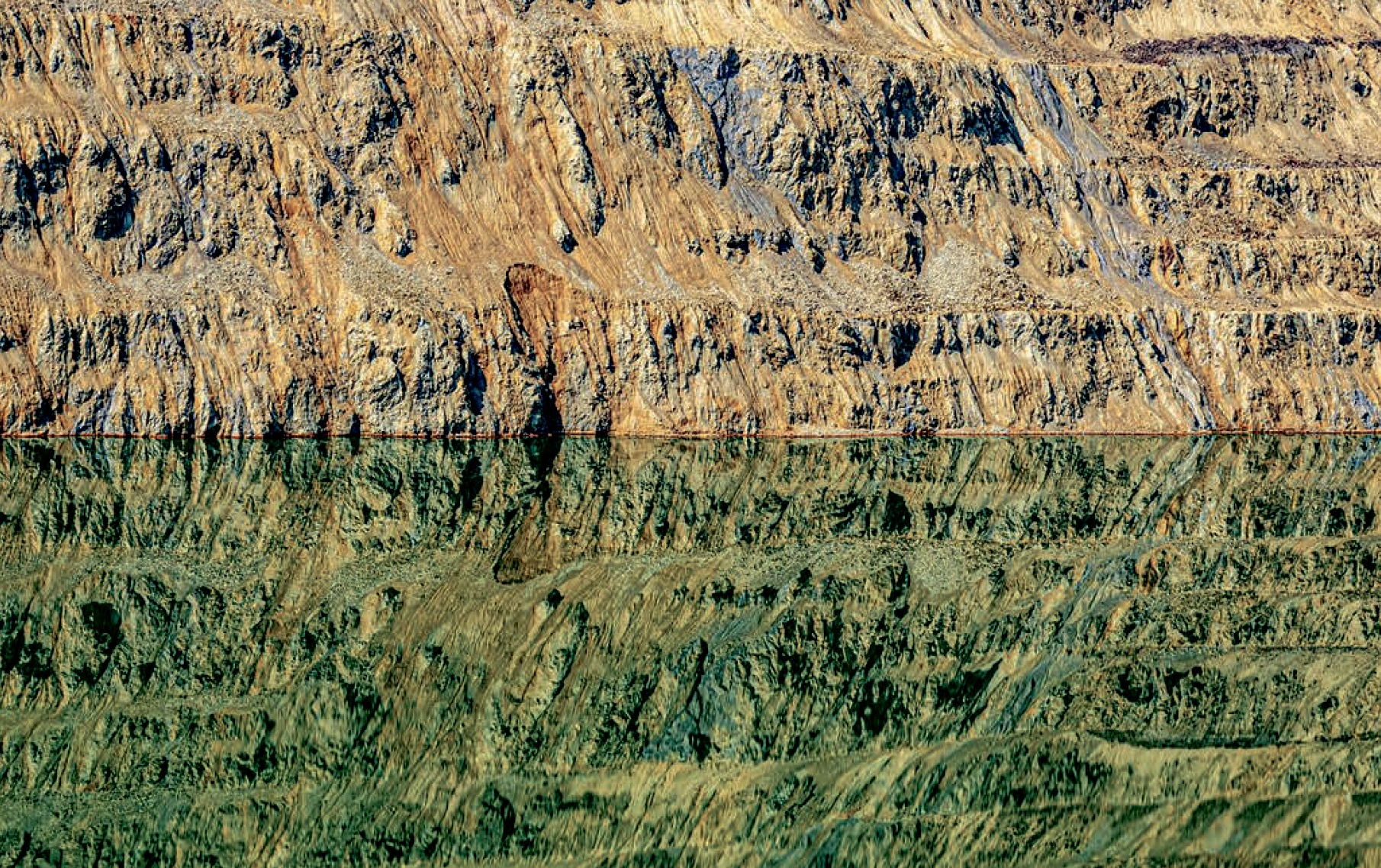
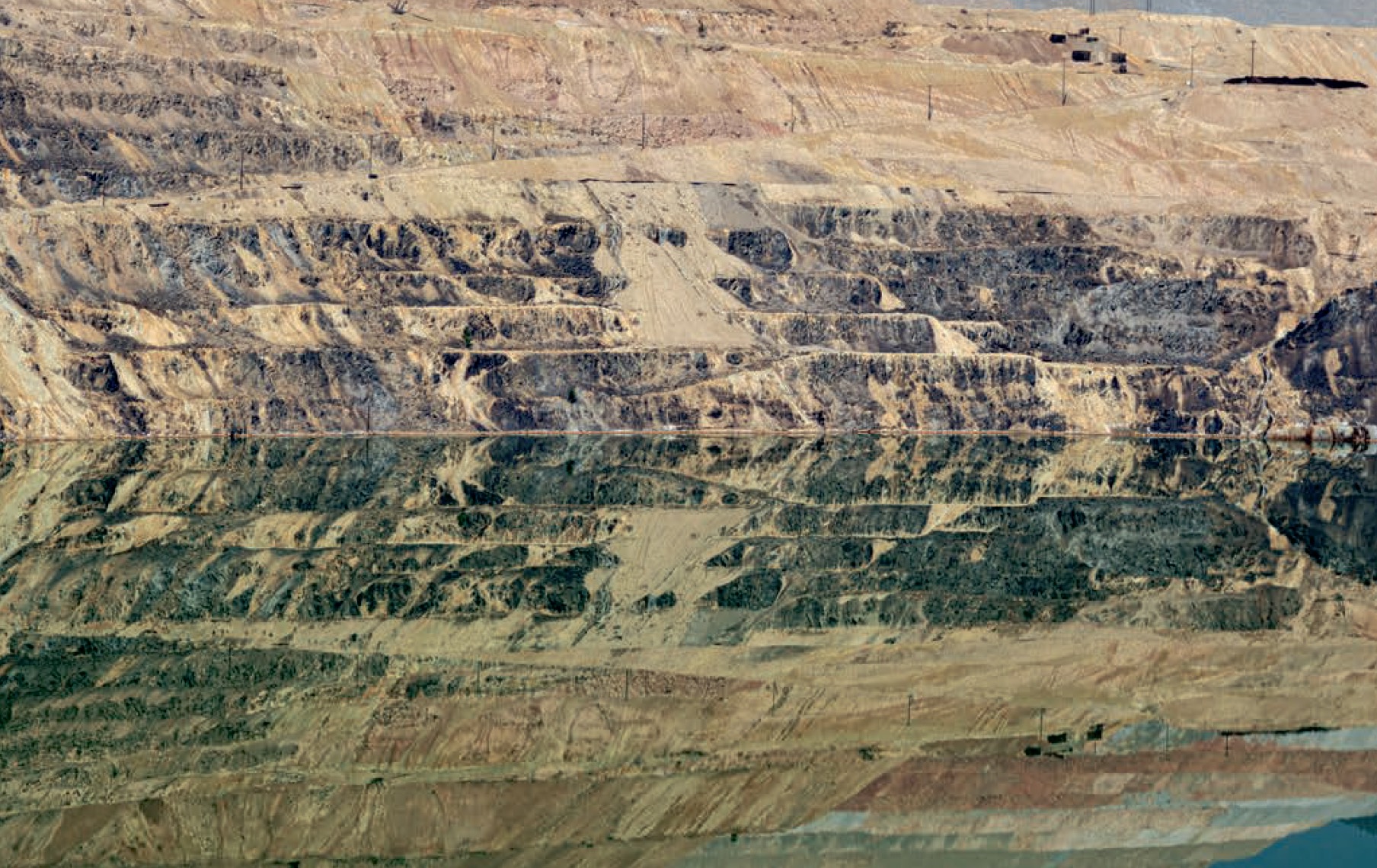
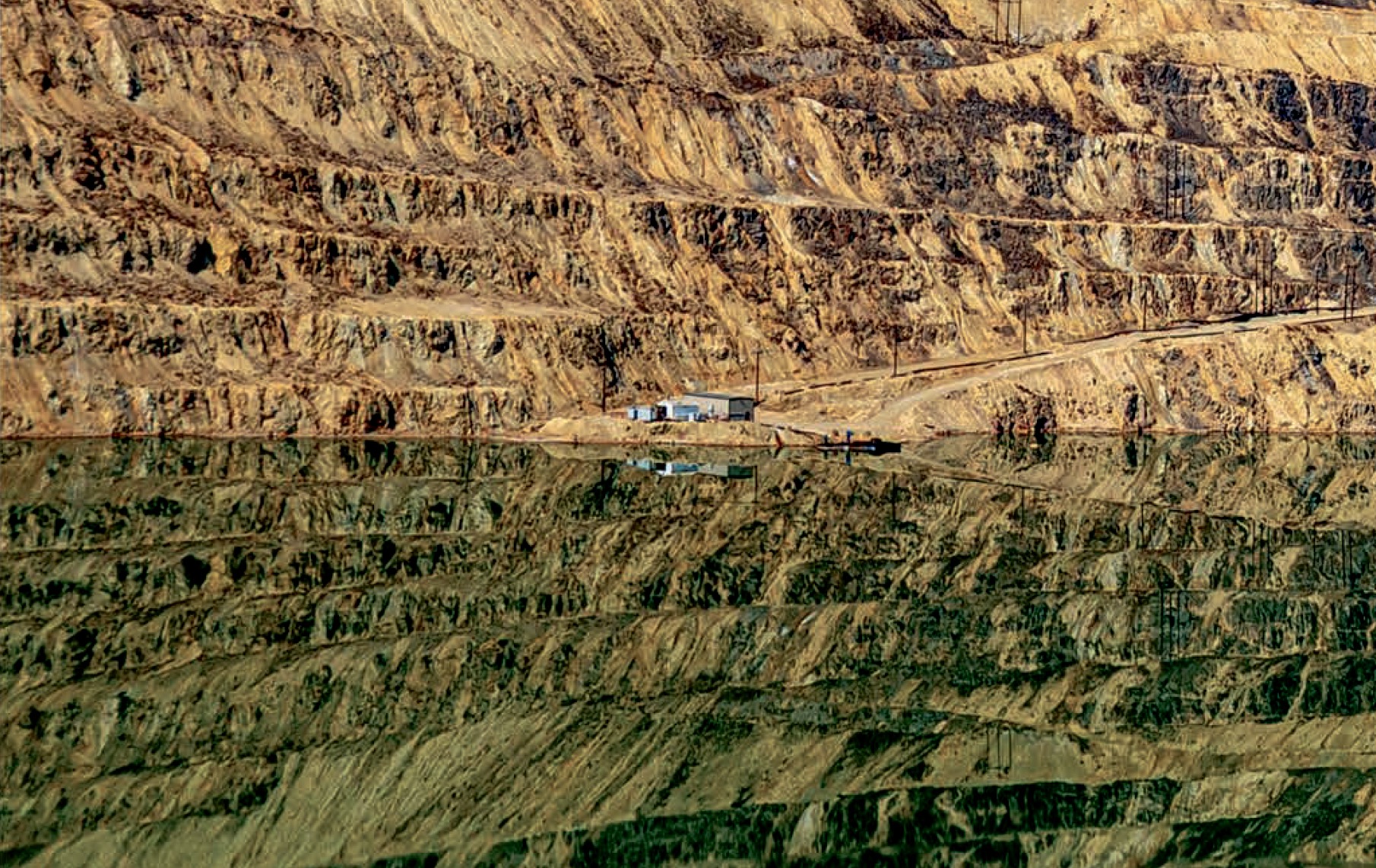
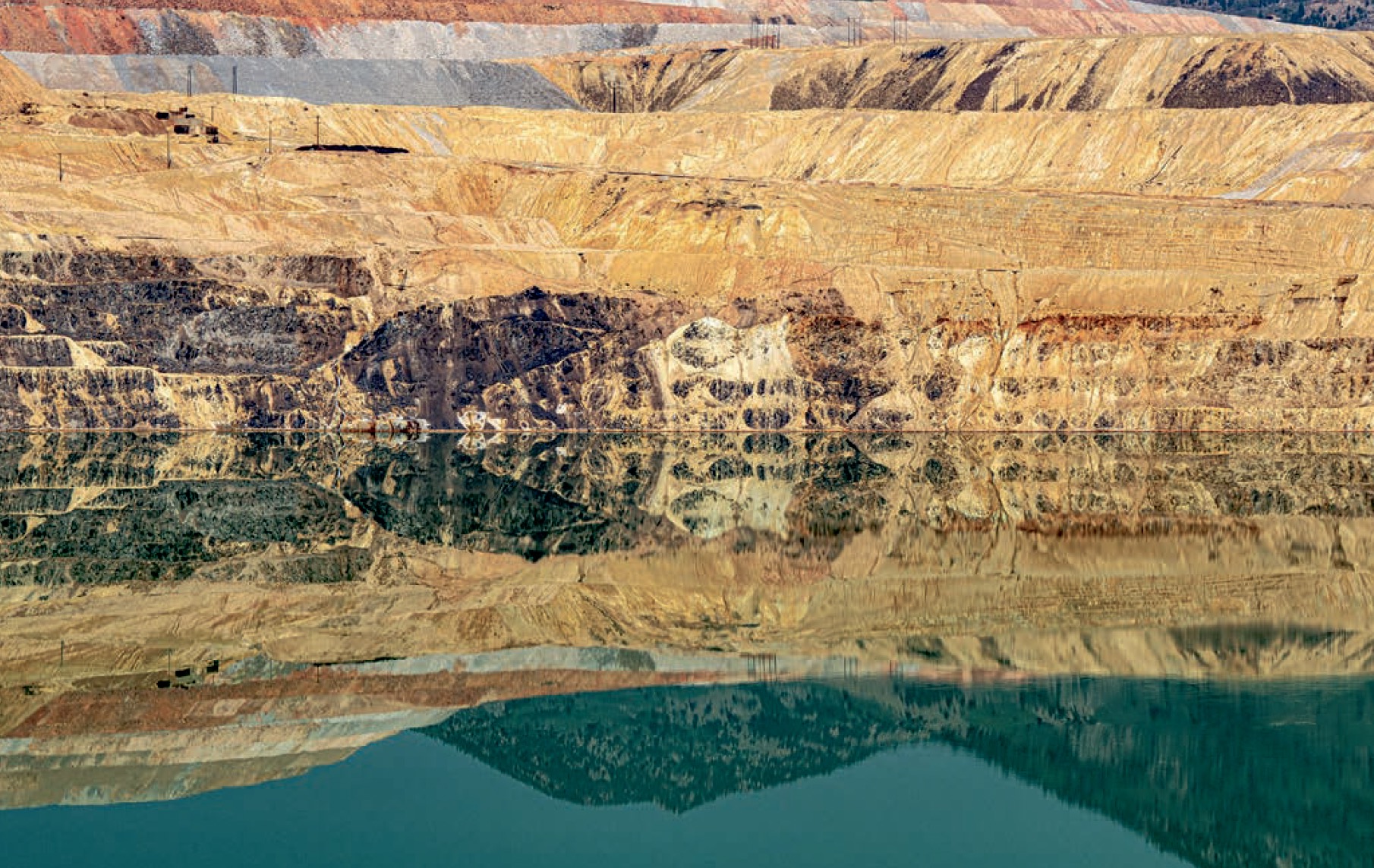
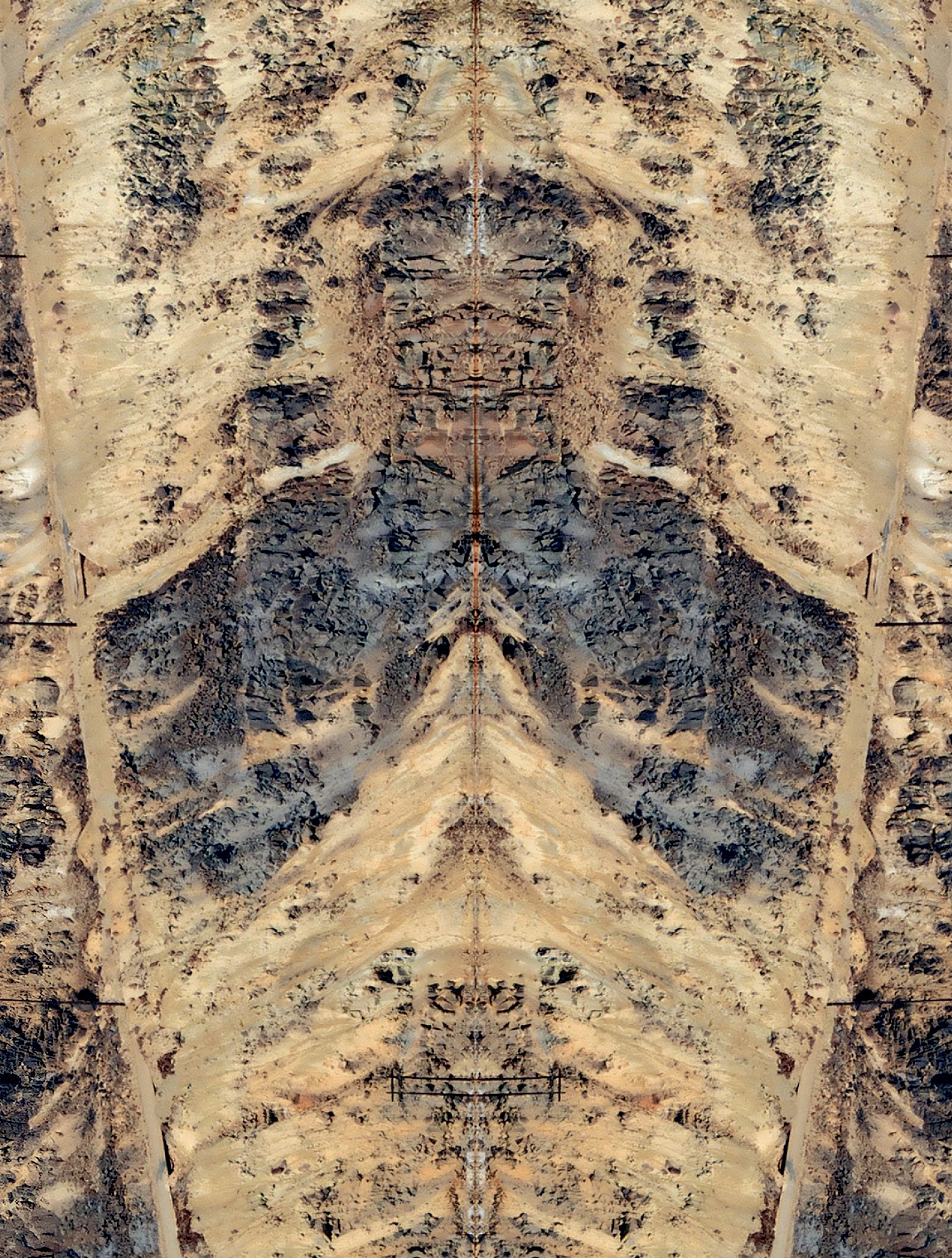
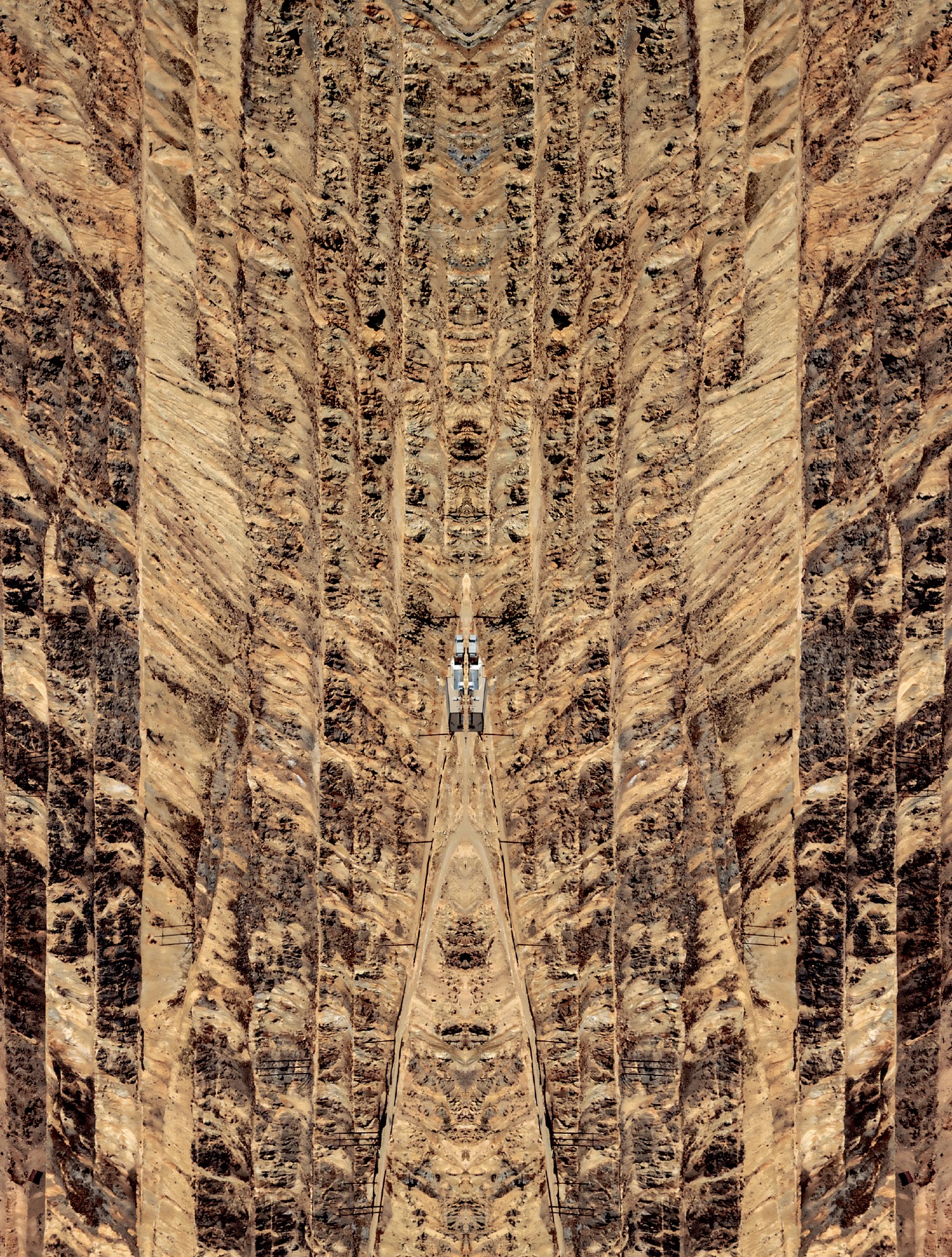
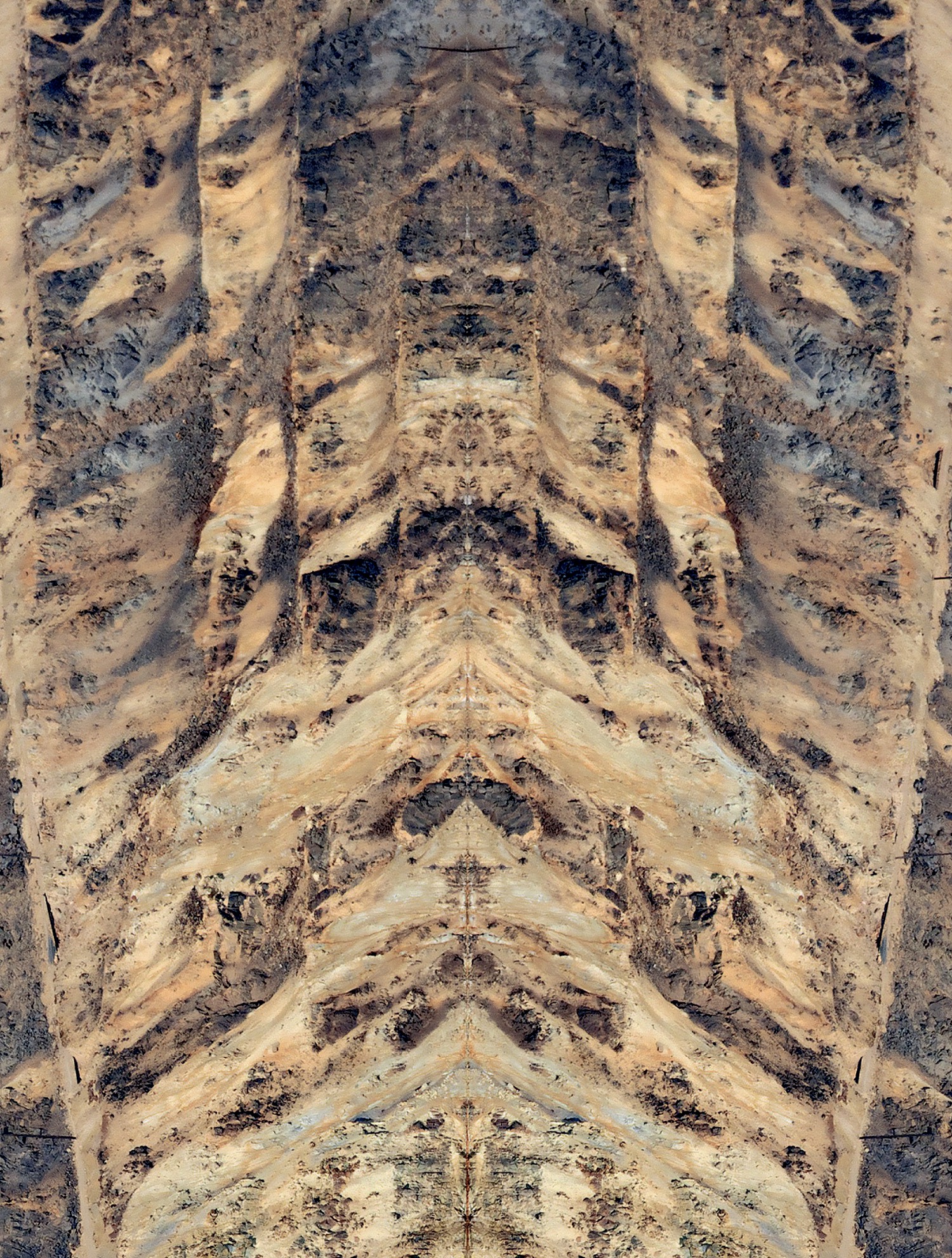
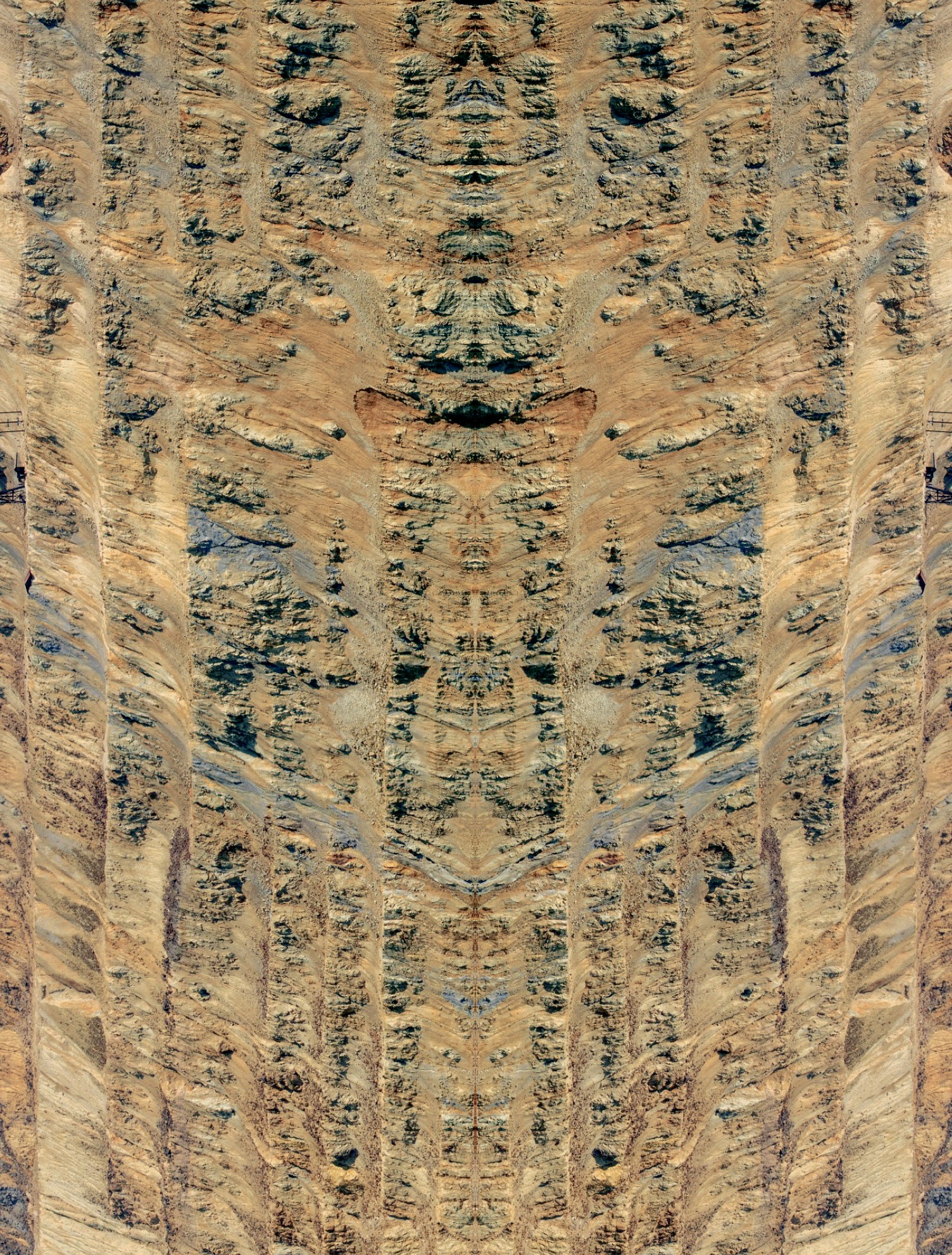
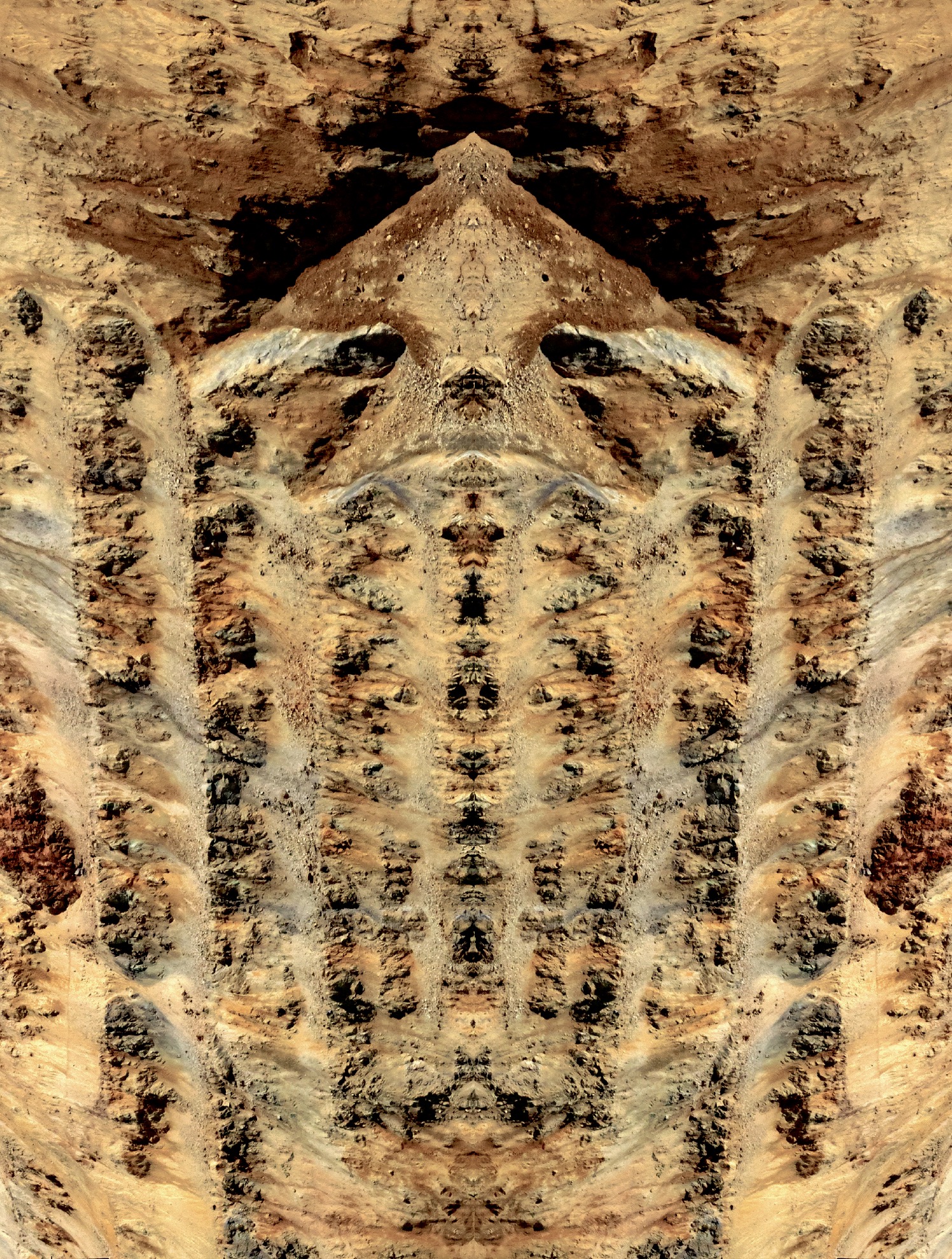
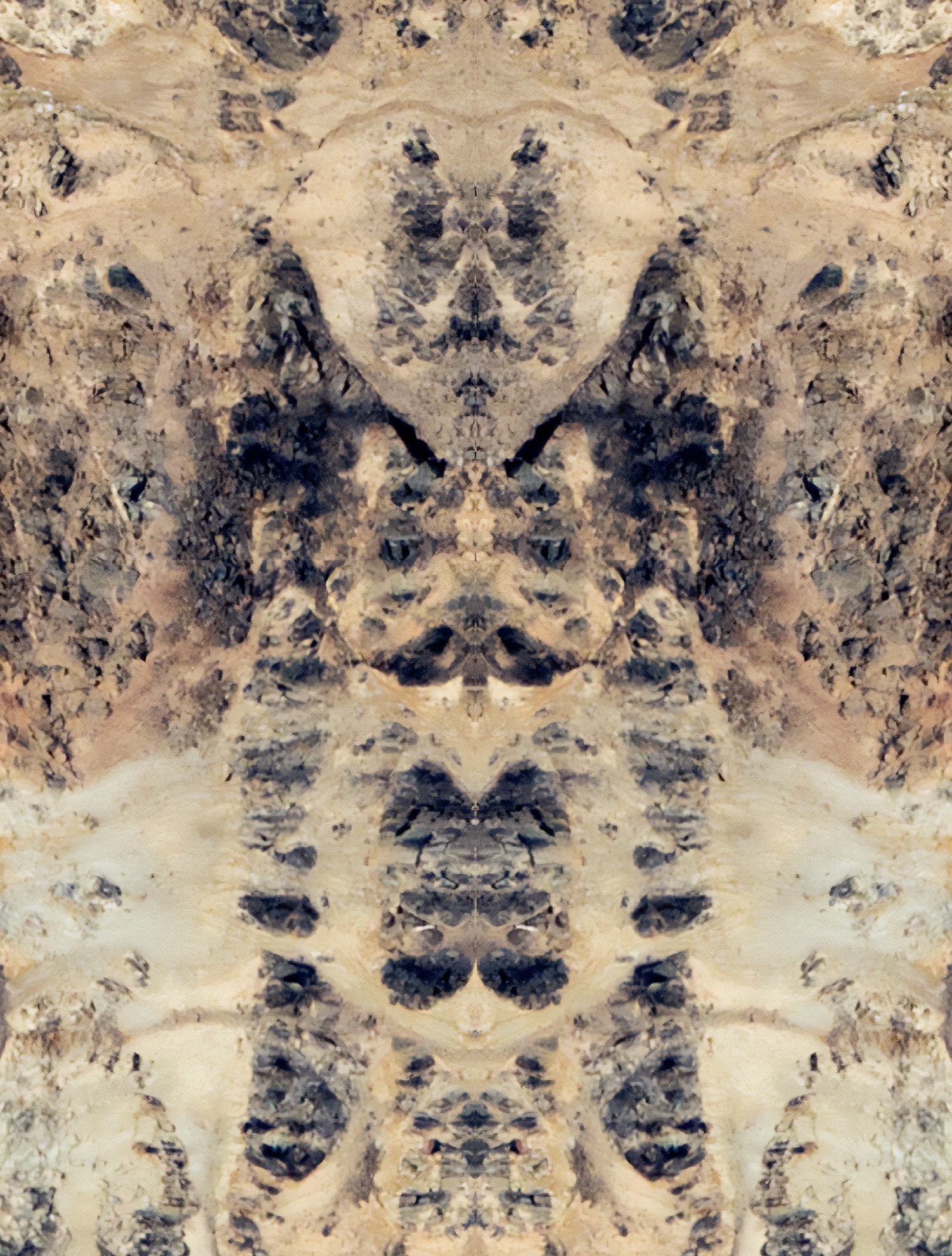
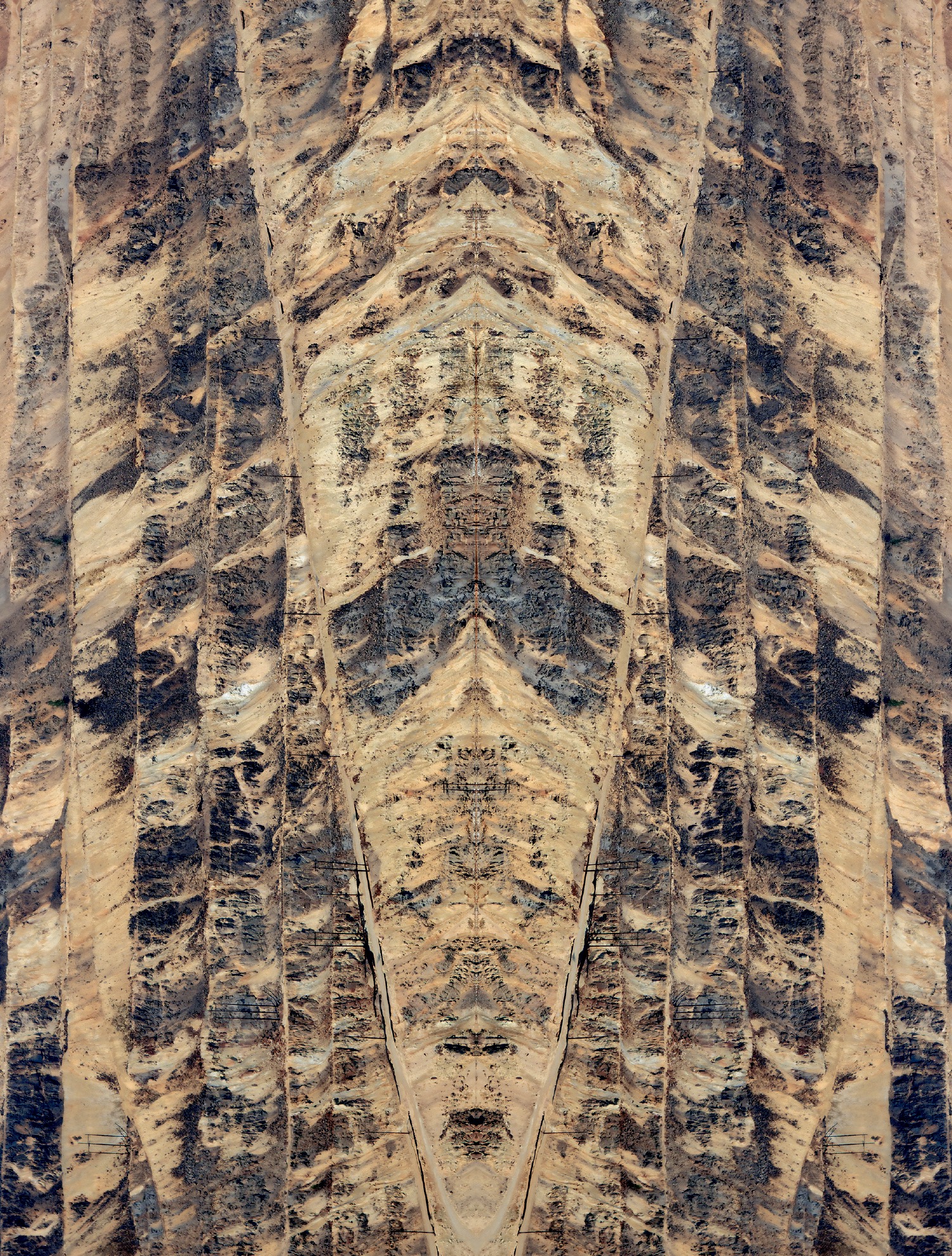
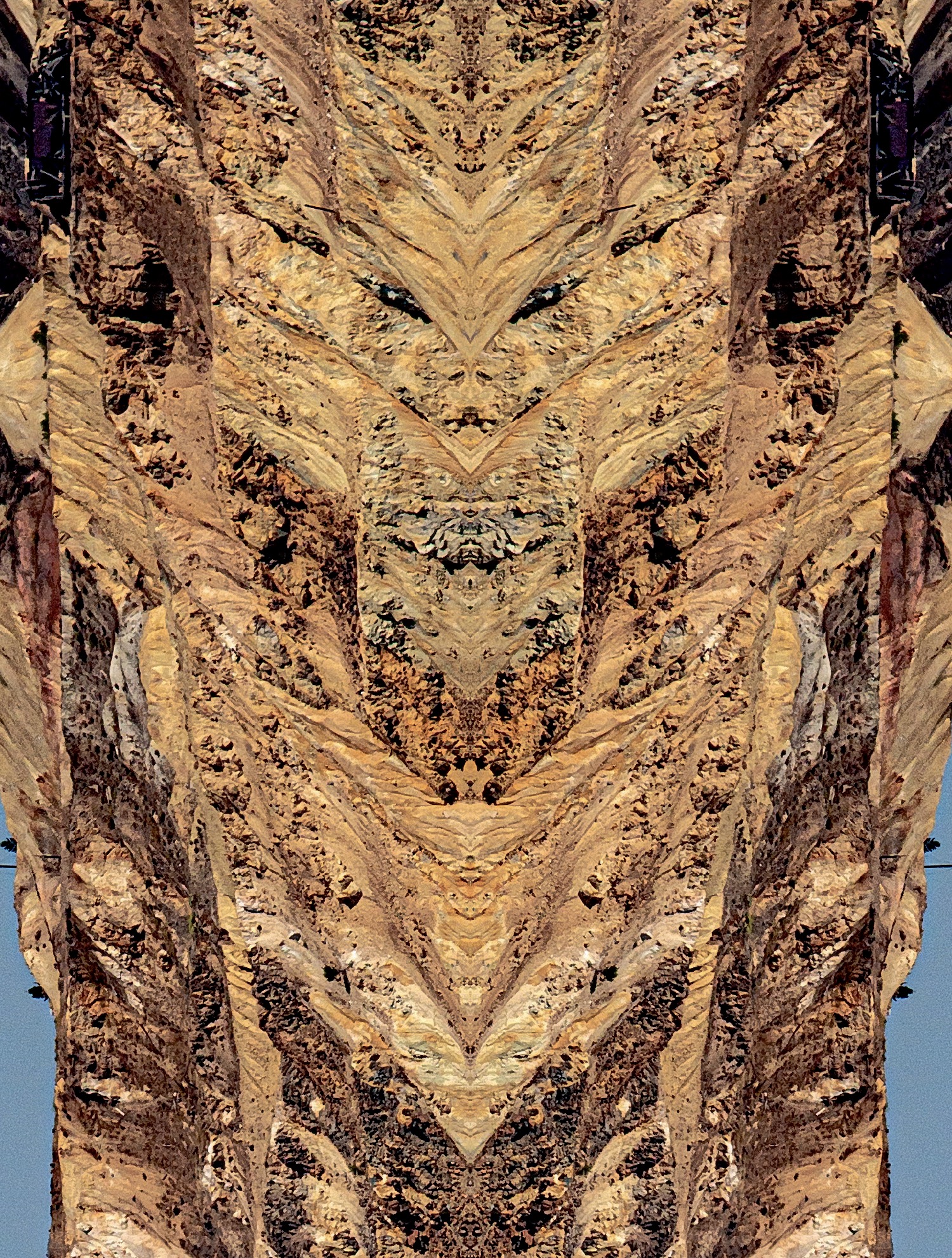
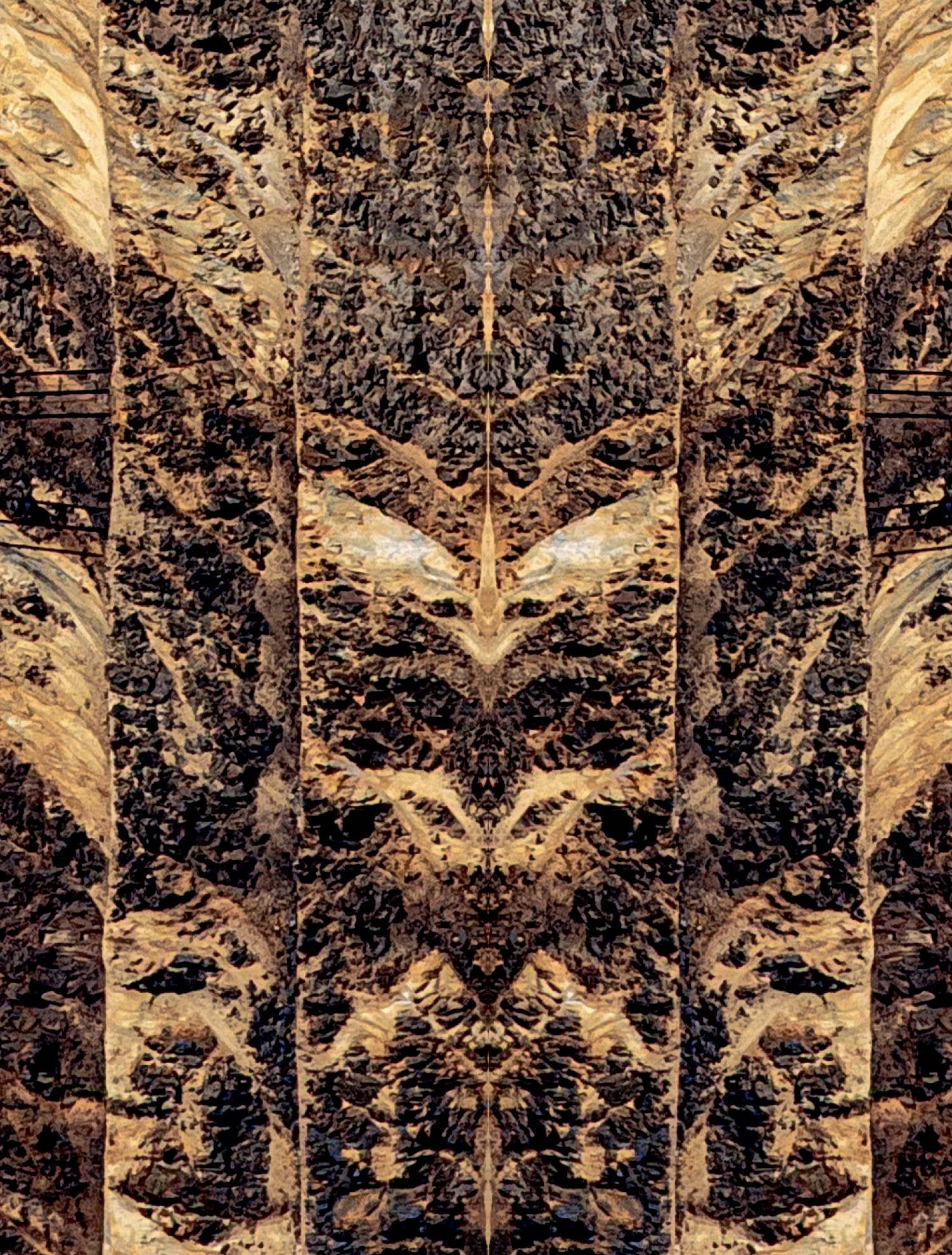
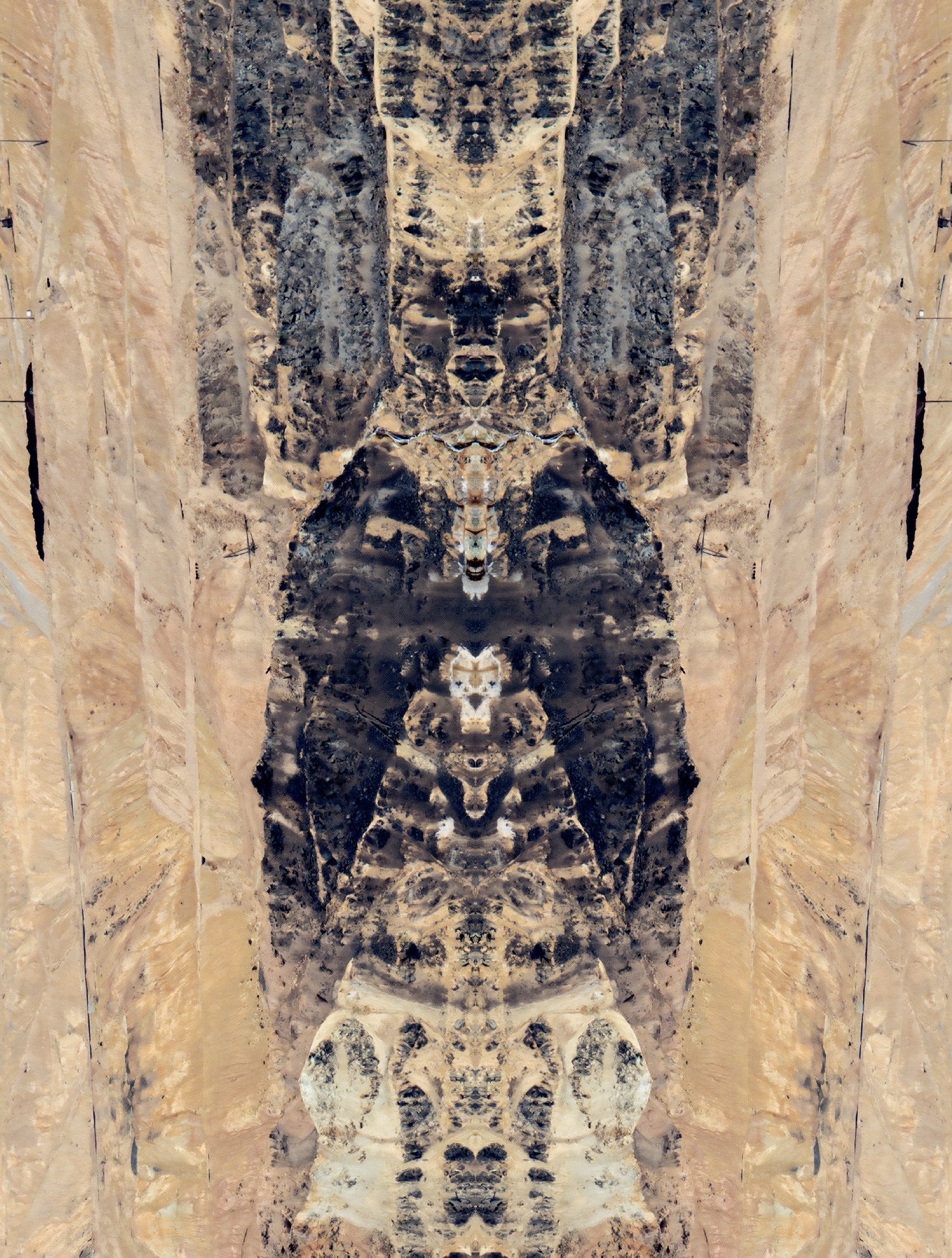
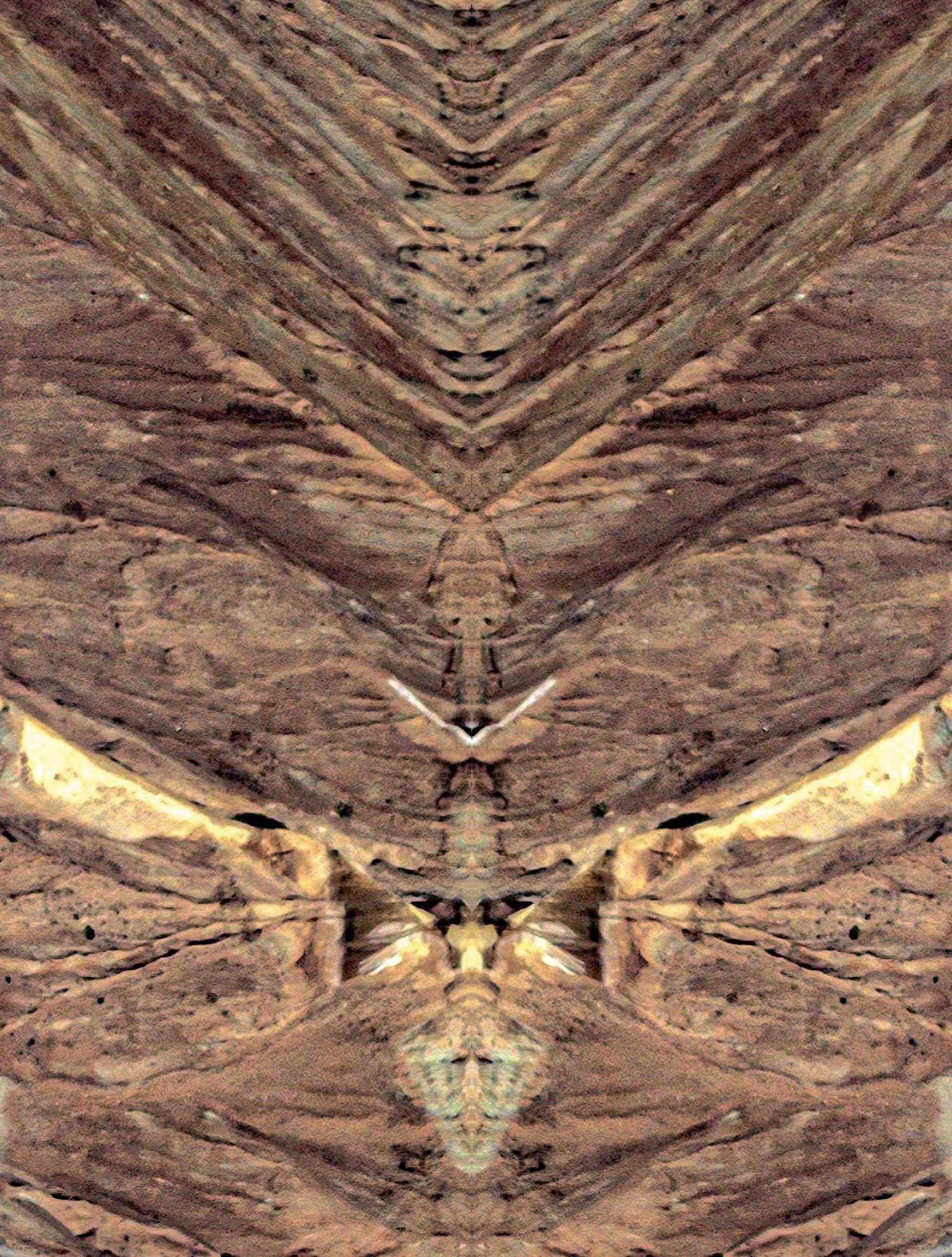
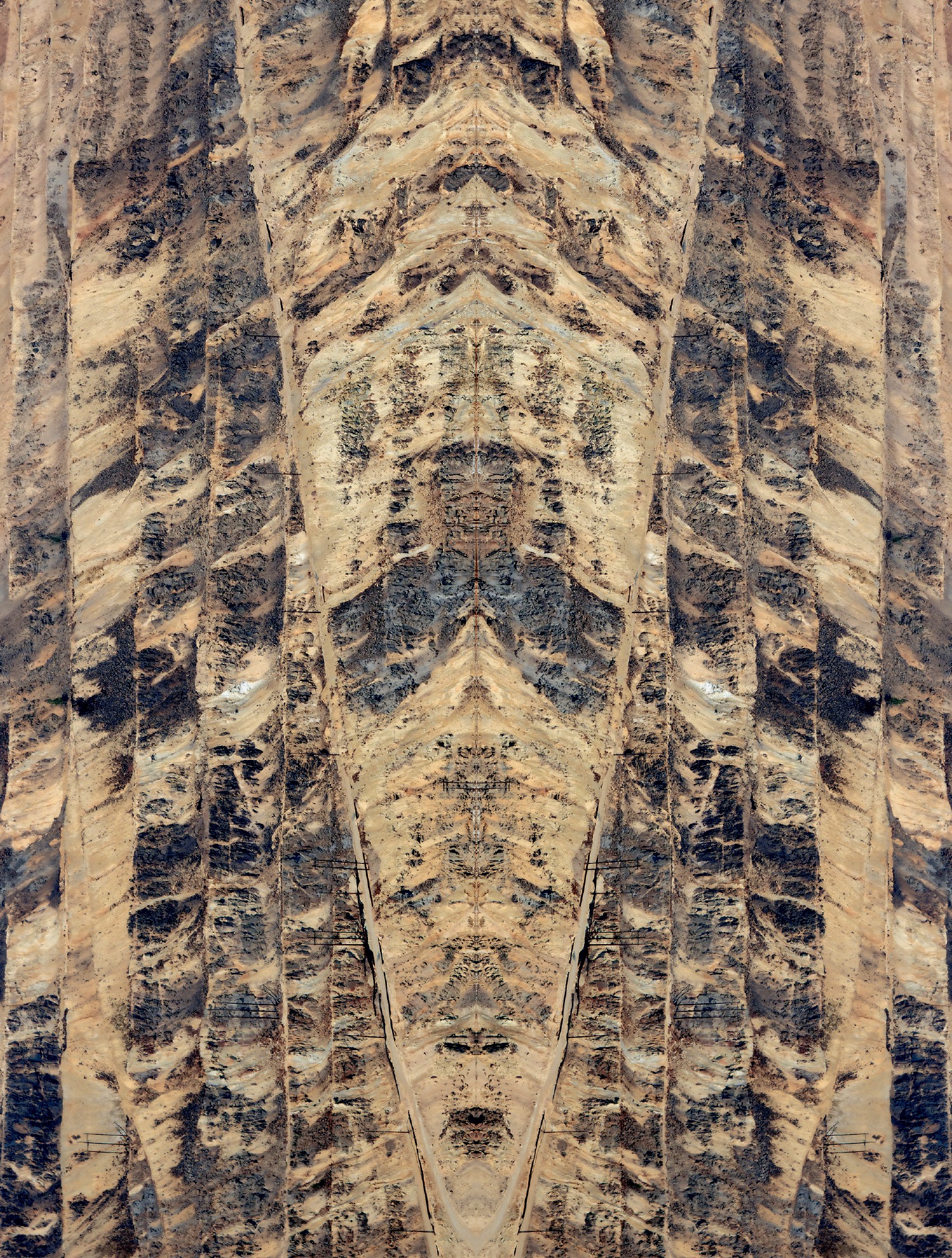
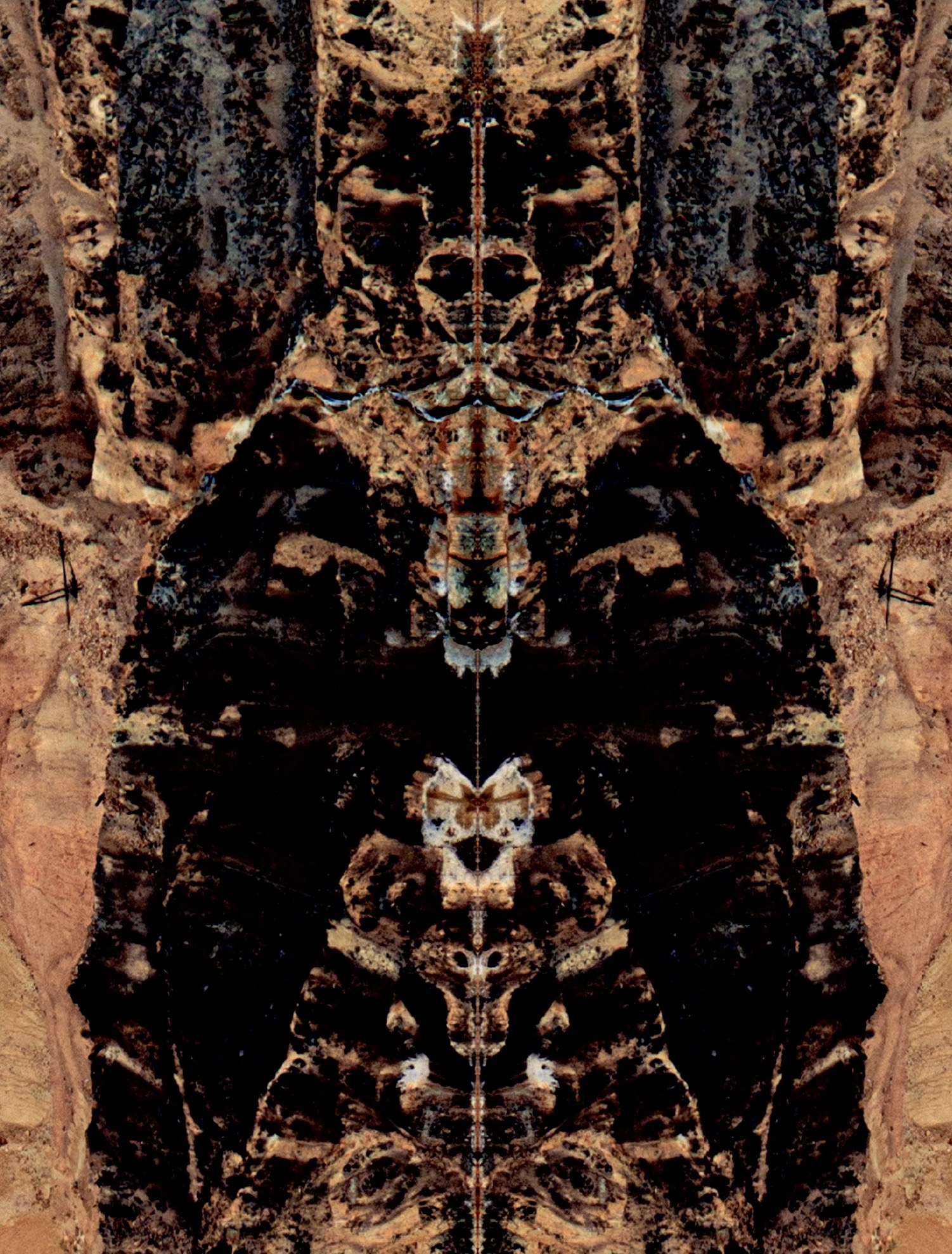
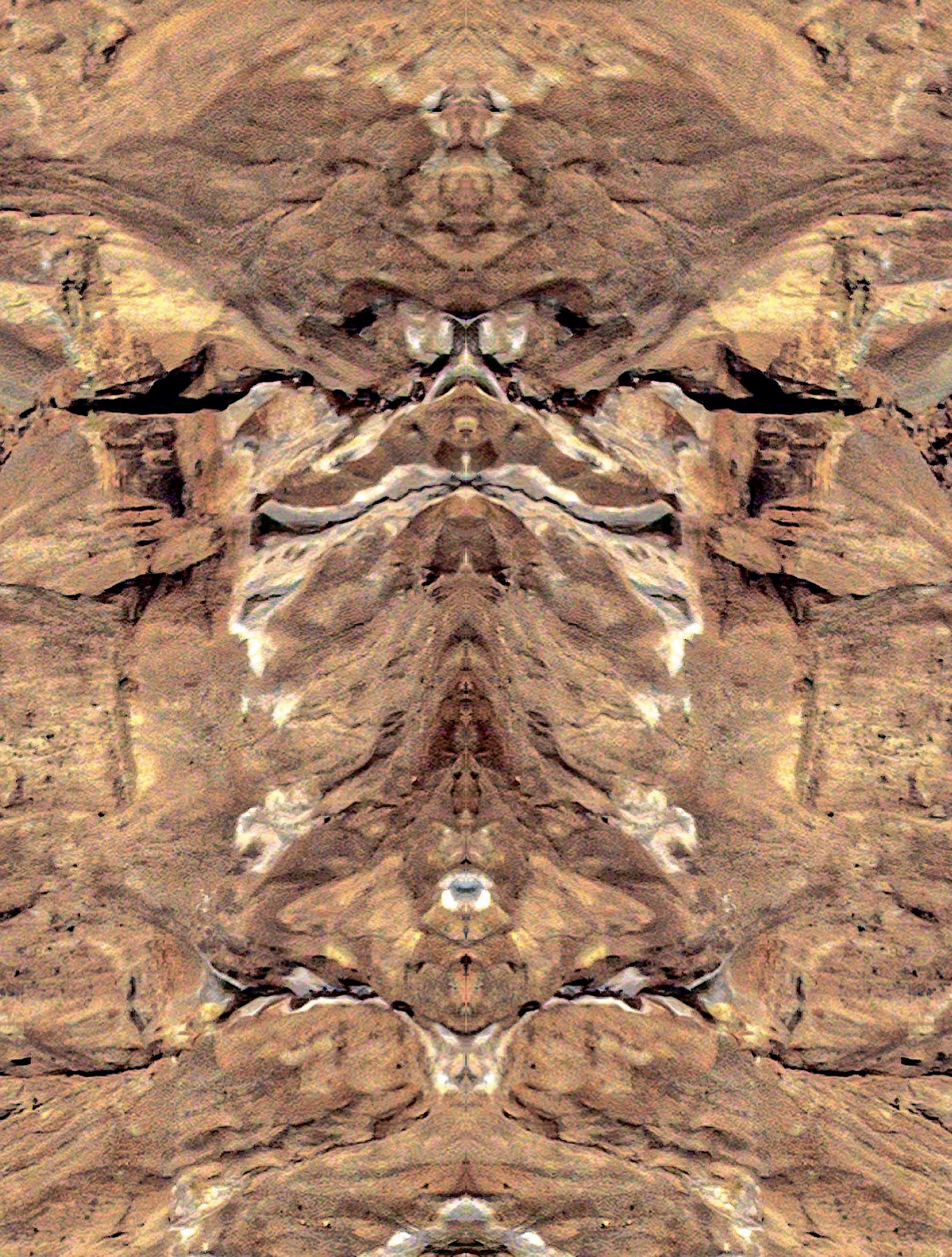
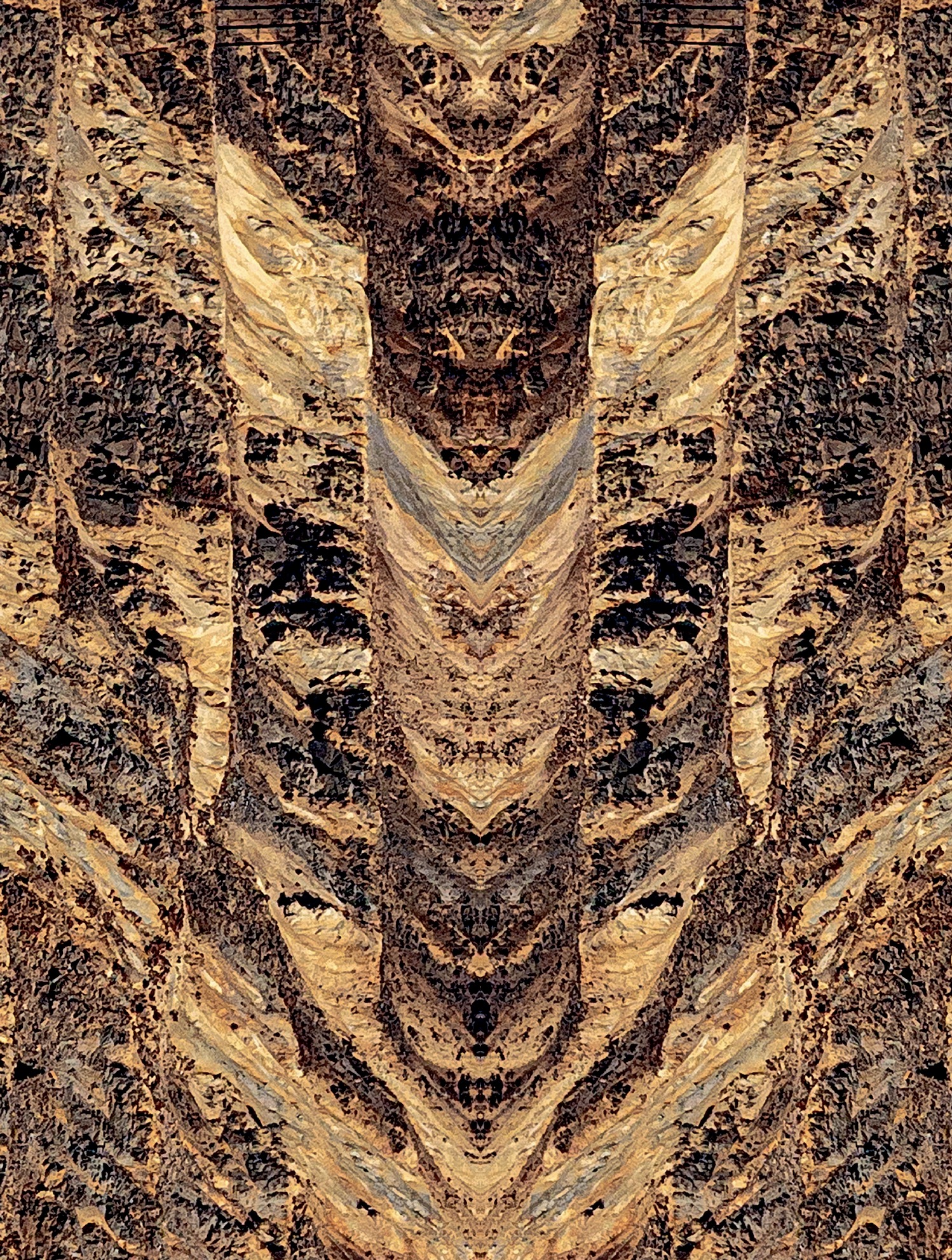
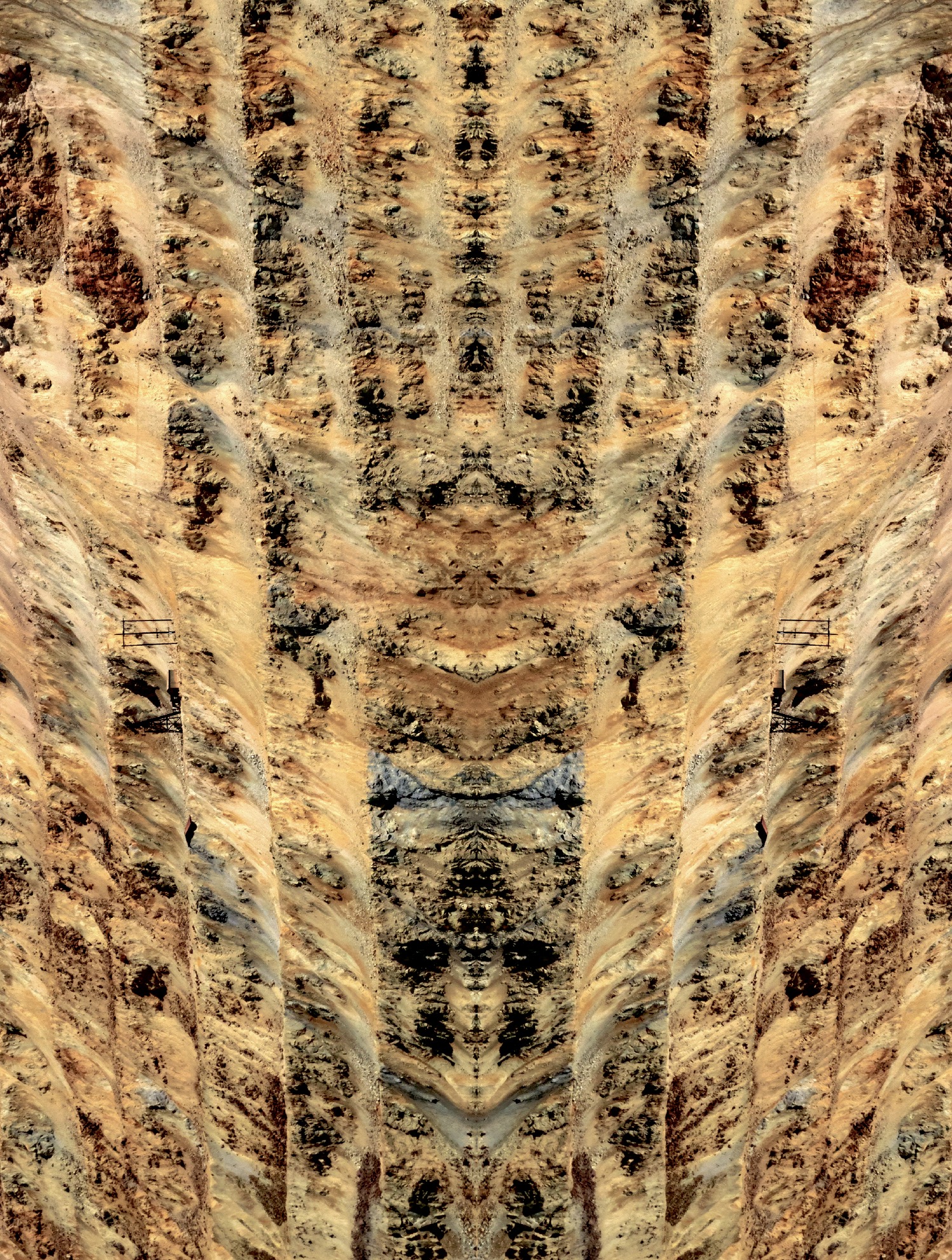
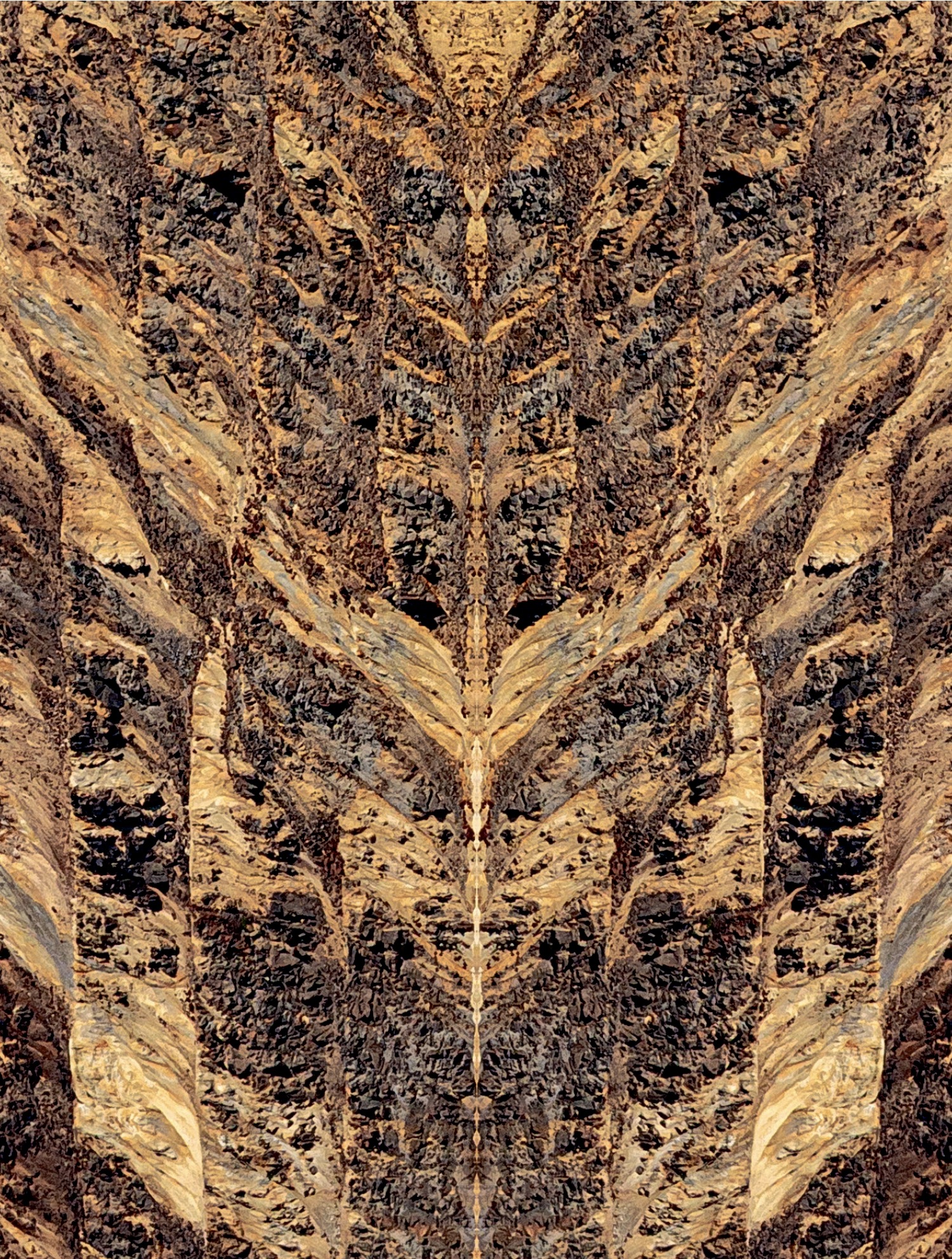
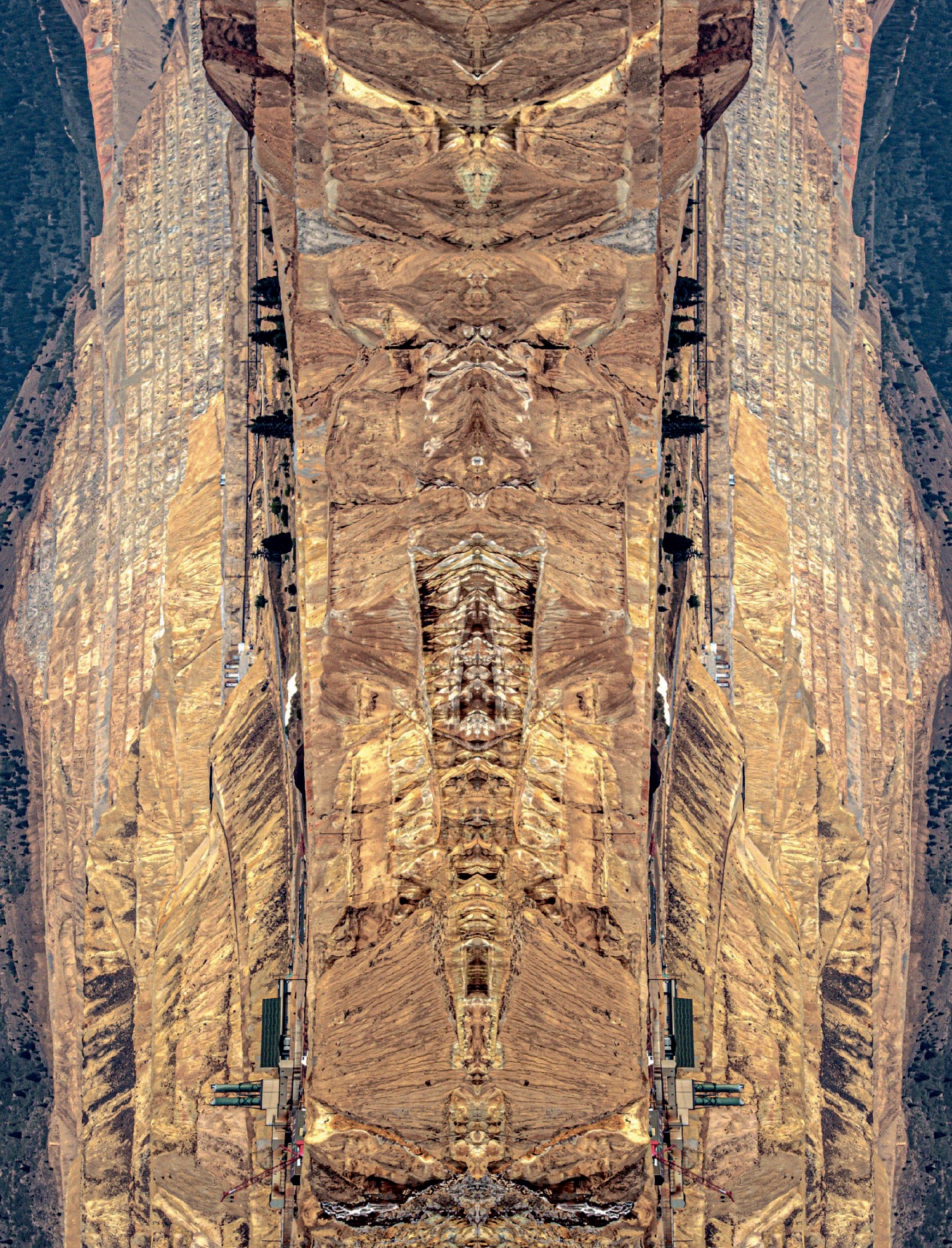
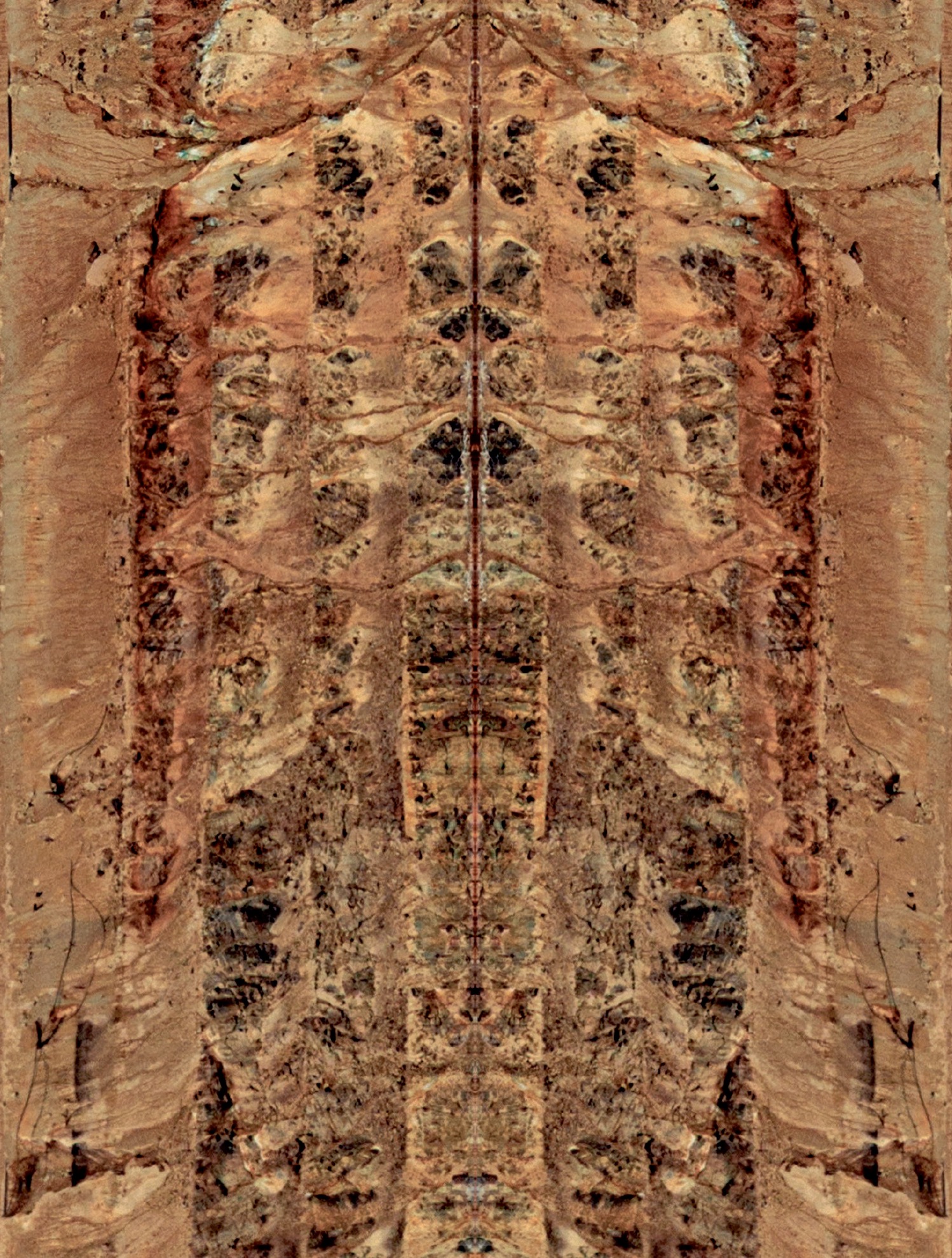
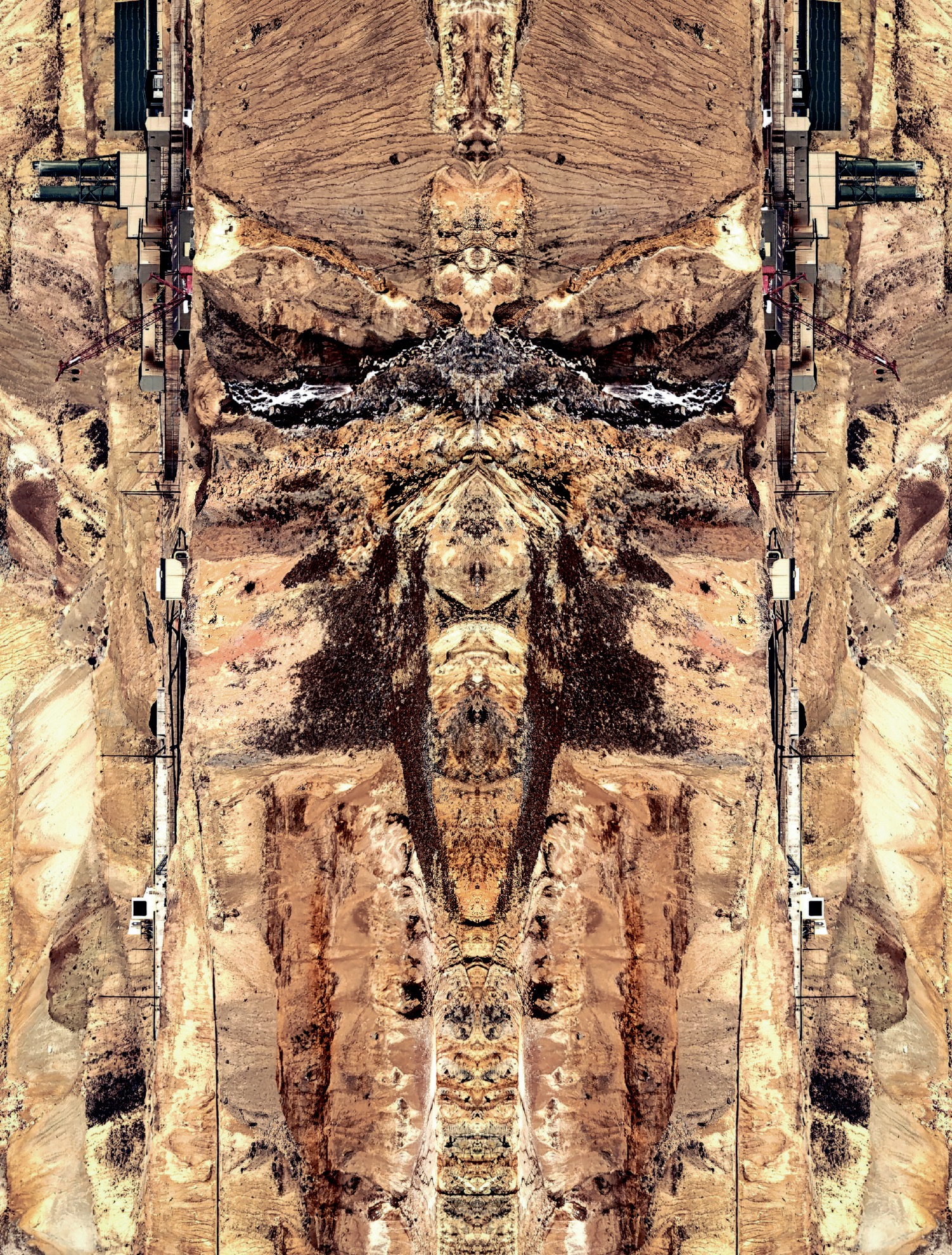
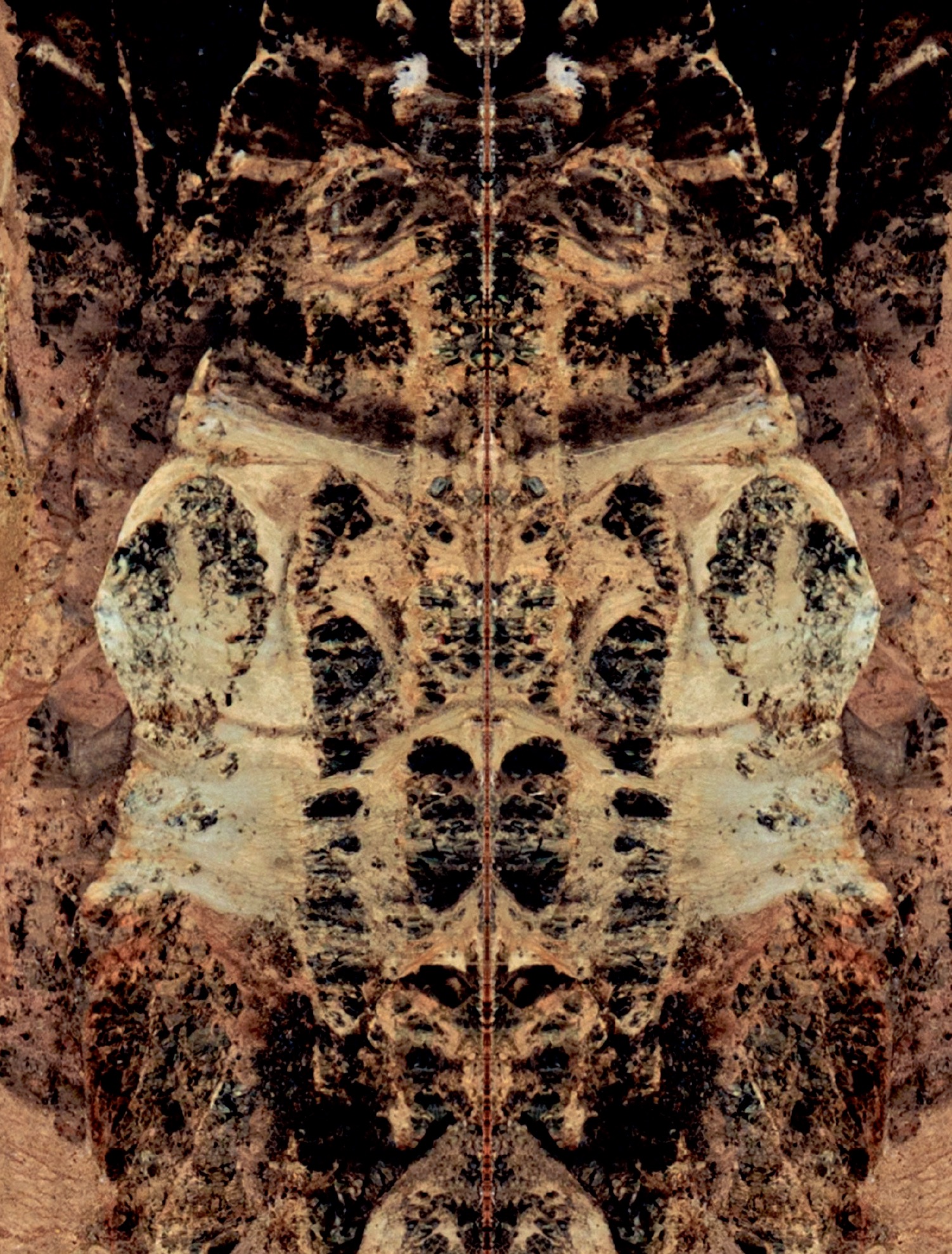
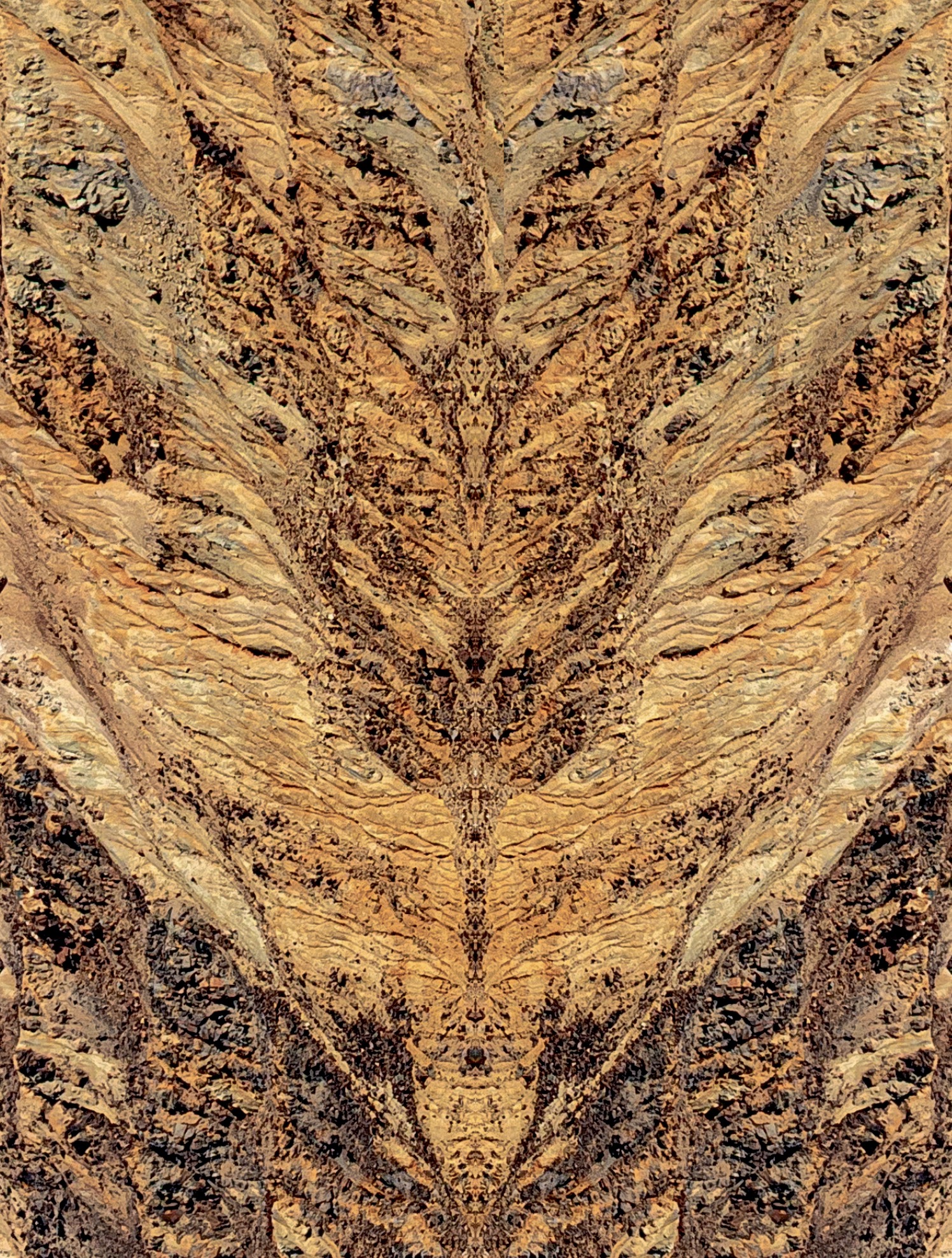
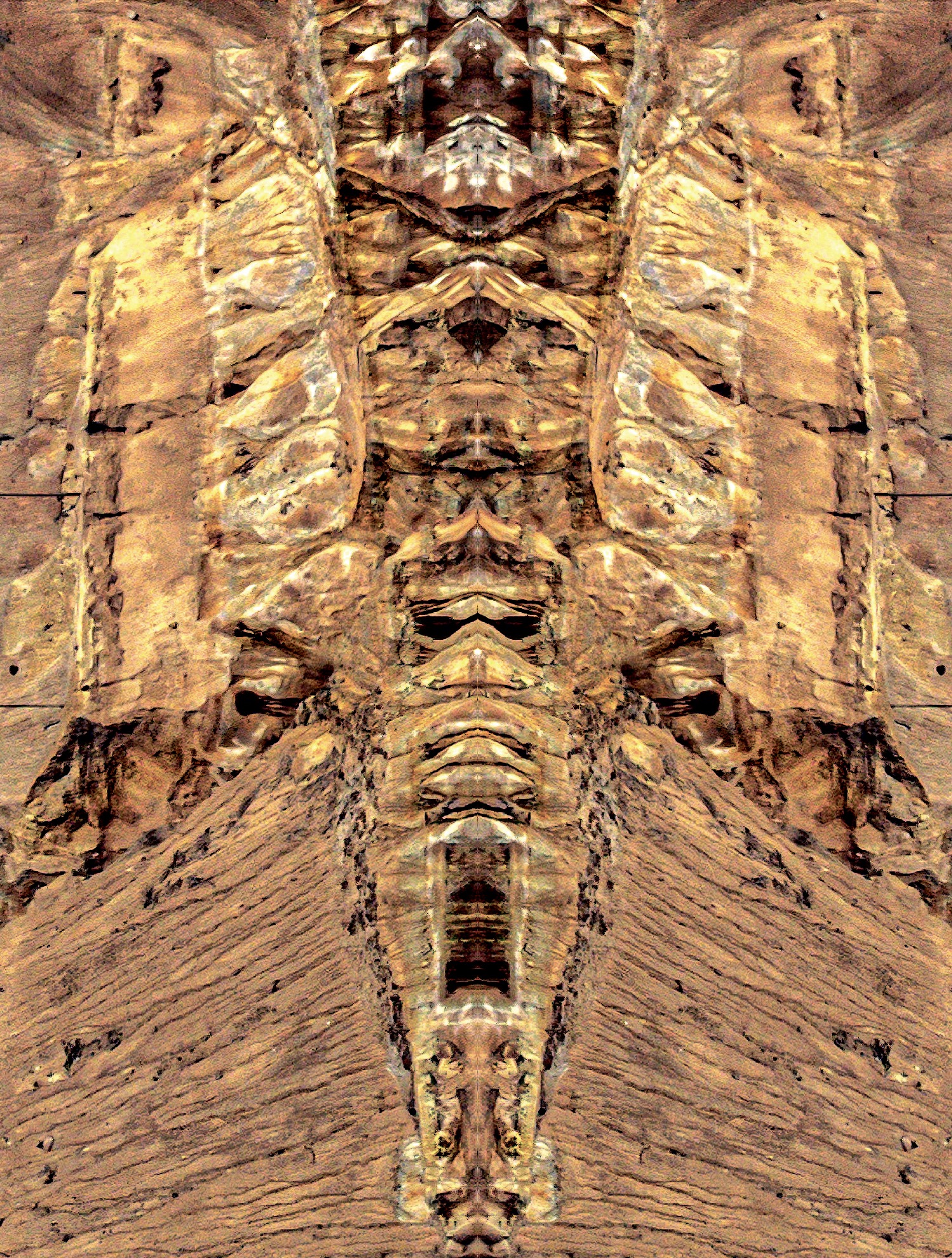
The Berkeley Pit in Butte, Montana is one of the most consequential industrial sites in North American history — a mile wide, nearly two thousand feet deep, filled with forty billion gallons of toxic water that will require management in perpetuity. It is the most expensive Superfund remediation project in the United States. For a century and a half, it has been called many things: an engineering marvel, an environmental catastrophe, a cautionary tale, a wound. Scott Cressman calls it a pantheon. Photographing the pit’s acid-stained rock walls and applying bilateral mirroring — a technique that folds an image along its vertical axis to reveal latent symmetries — Cressman discovered something that no one had anticipated: faces. Warriors. Deities. Masks of unmistakable visual authority staring back from the mineral surface with the full weight of everything this ground has been through. Not added. Not imagined. Already there, in the iron oxide and manganese and copper sulfate that a century of extraction painted onto the rock. Copper Gods is a landmark work of photography and ideas. Drawing on Gestalt perceptual psychology, the neuroscience of pareidolia, the cave art traditions of the Paleolithic, Indigenous understandings of stone as a living presence, and the Surrealist tradition of found imagery, Cressman builds a profound argument: that the most damaged landscapes of the Anthropocene are also, paradoxically, among the most generative surfaces for the oldest human perceptual compulsion — the drive to find the sacred in the geological. The figures are not cheerful. A landscape this scarred does not generate gentle presences. What it generates are dark entities and consuming voids and anatomical exposures — faces that carry their history in their mineral features and meet the observer’s gaze with ancient authority. This is not a book about environmental damage. It is a book about what damage made. And what it made, it turns out, is extraordinary.